Dotted Eighth Delay Studies

Setting up the U2/Hillsong delay in a variety of situations.

The Sessionists

Esther Subra (vocals), Serena Chew (keys), Justin (guitars), Alphonsus (drums and percussion)

Thoughts on G.A.S.

Why you should save up for an expensive guitar.

Setting Up Disaster Area DPC-8EZ and DMC-8D MIDI Controllers

An easy-to-follow video tutorial to get those patches programmed!

An Overview of My YouTube Channel

Feel free to browse some of the playlists on my channel. Hopefully this leads to you liking and subscribing!

Showing posts with label Performing. Show all posts

Thursday, July 4, 2019

Can an Ernie Ball Music Man JP6 Play P&W?


My wife got me an Ernie Ball Music Man JP6 with the DiMarzio Liquifire and Crunchlab pickups, and I'm in love with it! In this video, I answer the question if a guitar that's so geared towards metal can play praise & worship.


Wednesday, March 28, 2018

Project Mothership with Goodwood Audio (Custom Pedalboard Setup)


I did it. I bit the bullet and got myself a custom setup from the wonderful folks at Goodwood Audio. The following videos document the build process, some sound samples from the rig, as well as a full song demonstration of my pedals. I've also added a video on how to program patches on the DPC-8EZ and DMC-8D.

And for those who need pictorial summaries:


I hope these videos help you in your decision-making regarding pedalboard setups!

Friday, December 8, 2017

Bring Me to Life: Trying NYXL on a Les Paul


The new string feeling is amazing. I took a break from essay writing by trying on a set of D'Addario NYXL strings. I had wanted to try a low tuning to play stuff from A Perfect Circle. As much as they aren't a good influence in terms of lyrical antithesis to my Christian faith, James Iha and Billy Howerdel are geniuses at crafting intricate but simple guitar lines.


My plan to play in Standard C# failed. As it turns out, the string tension when top-wrapping a Les Paul drops significantly, to the point that I didn't need to crank my tuners that much to raise the strings to pitch. At Standard C#, the strings were flappy and had very little tension, feeling like 8's and had a terrible time staying in tune.

I raised the pitch to Standard Eb, and it was a much better experience.


Oh well. Lesson learnt: I’ll try out 13 gauge and drop tune that next time!

Friday, June 16, 2017

Tones and Tips: Gretsch Duojet

I recently got a hold of a Gretsch Duo Jet. It's a completely unique instrument, with certain quirks that takes some time getting used to, and a sound that has twang and growl, a balance between a single coil and a humbucker.


Here's a video I made that shows the unique tones and control scheme for the Duo Jet. I would have spoken and have some dialogue, but there's constant construction happening around my new home!


Tuesday, March 1, 2016

An Overview of My YouTube Channel


If you're wondering what kind of content I produce on my channel, they're mostly lessons and play-throughs of songs. Feel free to browse my channel after looking through these playlists, and don't forget to like and subscribe!

The Electric Guitar


Covers and Tutorials


Snippets and Musical Escapades

Saturday, September 27, 2014

Rant: How To Make a Great Night of Music a Complete Turn-off

I played at Blujaz cafe for an adhoc band put together to support Ivni, a blind drummer (Yes! Blind! He has trumped all other drummers I know) who's a drum student at Ben Lee's drum school.

It was meant to be a great night of music, where students showcase what they've learnt in school. Our band was meant to take stage at 8.45pm--as of writing, there's a band that's been playing since and it's now 9.21pm. I'm not one to complain, but I really felt cheesed off by these young punks. They misunderstood the intention of the gig and made the show about them. Seriously? A night dedicated to music students, giving them the opportunity to experience a live gig, and you pull off this stunt?

"Hi, we're _________ and we're here to play some music for you tonight. Thanks for coming down to support us!"

No. We're not here to support you. If you had any integrity, you would have said something more along the lines of:

"Hi, we're _______ and our drummer ________ is actually learning drums from the school, we're here to support her. Let's encourage ________ !"

I believe the appropriate Singlish term for what I witnessed with this band is buay pai sei. How shameless can a band of young punks get? Let's see:
  1. You certainly took your time setting up. Oh yeah, I was counting. You didn't need to bring your three electric guitars, massive pedalboards, your MIDI-controlled keyboard and sound module. Could you not have simplified the setup for this gig, especially since there were many students waiting their turn to perform? Can't you tweak the existing setup that's there?
  2. You were all fancy-smancy with working the crowd. I get it that you're a young band. I get it that gigging at legit places is hard to come by. But you didn't have to do the long introductions, regale us with the story of how your band met, and give special thanks to your parents/girlfriends/significant others/cats/dogs/hamsters for inspiring you.
  3. And when you finished your jaw-dropping performance (again, I don't normally bash bands or other musicians, but you guys were not as fancy as you made yourselves out to be), you took your time tearing down your equipment. Hurry up!
By the time we took the stage, it was nearly 9.40pm. This band played something like 5 long songs complete with dual-guitar solos and keyboard solos.

Wah lau. Sibei puay sai lei you all! Come back when you're old enough to see that performing isn't all about you all the time.

Thursday, November 28, 2013

Farewell, Fair Well


Well, it's time we all moved on. While I'm performing a factory reset of Chiyoko, I'll spend the next minute reminiscing. Chiyoko (which means offspring of a thousand generations) is a Variax 700 and was the guitar that got me into the fast lane of speed-picking. I learnt my licks and riffs from Dream Theater, Paul Gilbert and Joe Satriani tunes off her.

Chiyoko also saw me through my university days. I would resolve to study harder, but she would beckon me to relax for a couple of minutes. Those minutes turned into hours of practicing my chops, jamming to my entire CD library, and just "messing around" the myriad of settings possible with the alternate tuning capabilities of the Variax.

Gigs were so fun with Chiyoko. I'd chuckle at a befuddled audience as is scrolled through electric, acoustic, resonator, sitar and 12-string patches within the set list (those were tough days of playing for "experimental" bands). I saved time in the studio by eliminating the need to change guitars after a good take.

But those days are behind me, and the listener of today is so exposed to digital music that the guitarist should be as organic and authentic as possible. So long, Chiyoko. You'll go on to be with people who will use you better. It's been real.

Monday, November 4, 2013

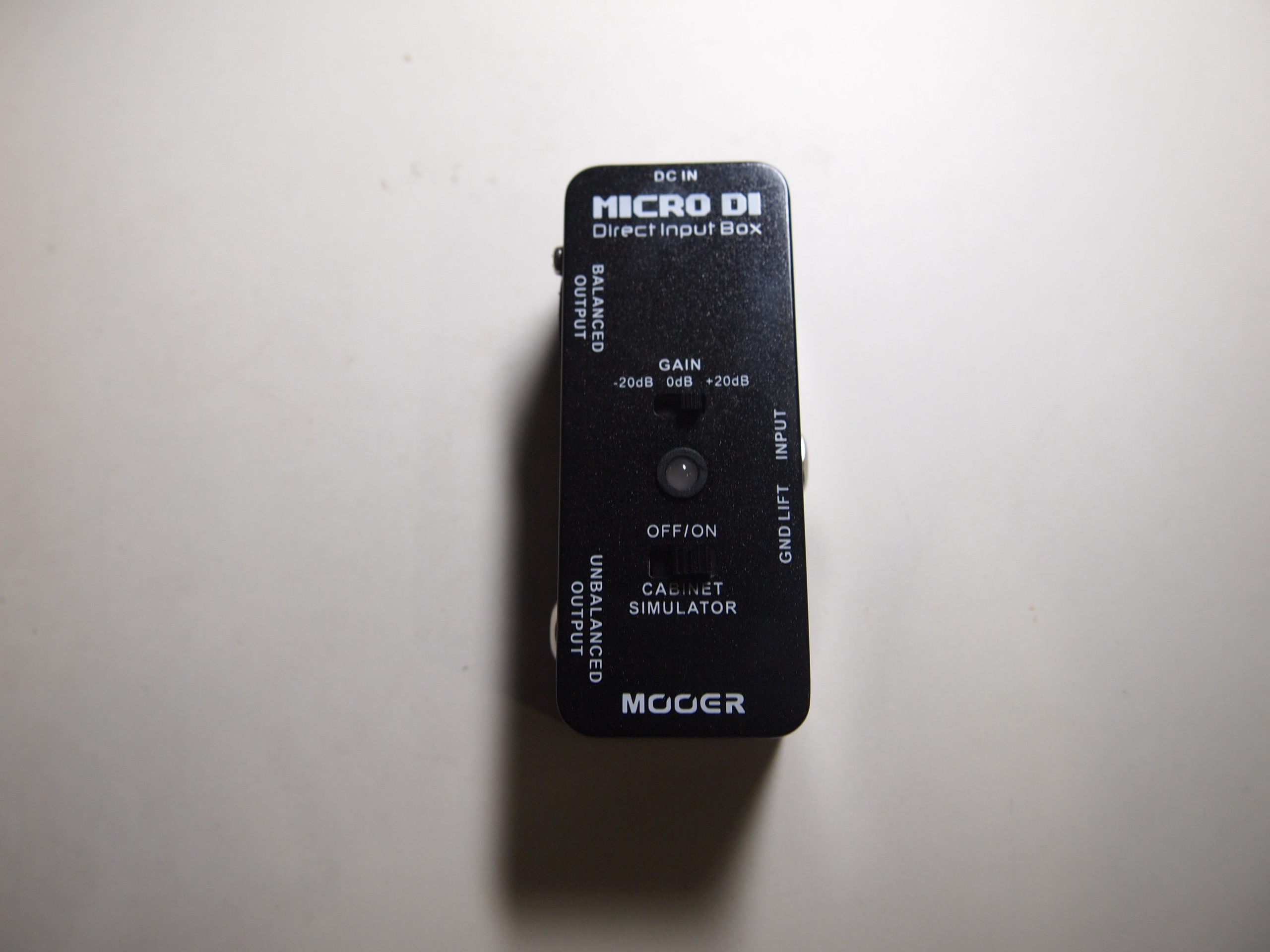
Gear Review: Mooer Micro DI (with Cabinet Simulation)


Here's my review of the Mooer Micro DI, with a focus on the cabinet simulation feature. To provide some background, I gig pretty frequently and need to go amp-less most of the time. I needed a pedal with cabinet simulation so I can go direct into the venue's mixer.

The Mooer Micro DI is a great tool to have in your gig bag or on the pedalboard. Its cabinet simulation is actually pretty decent, although it sounds best with clean to moderate overdrive. Anything over the top, like high gain and heavy modulation, will tend towards the muddy side.

Feel free to check out my video reviews to hear how it sounds, first through a single-coil equipped guitar like a telecaster:

And then through a Les Paul:


Thursday, June 6, 2013

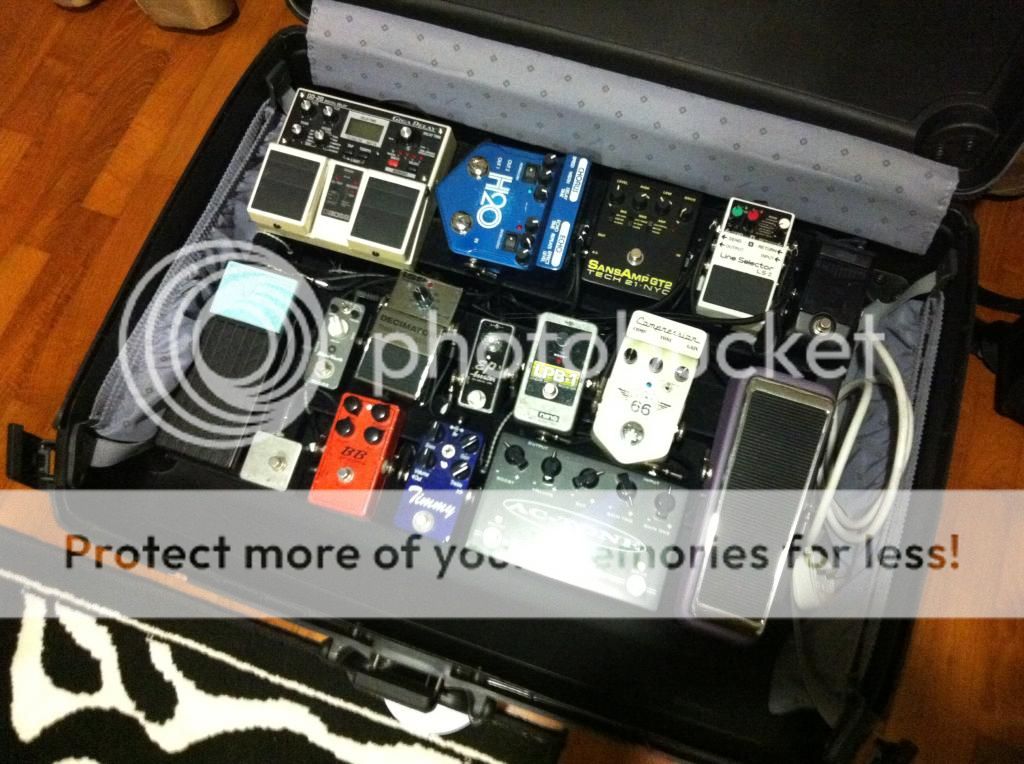
A DIY Flight Case

I totally stole this idea off Mervin John, guitarist and band leader extraordinaire, when he brought his rig down for us to check out during our band arrangement class. If you have a heavy pedalboard, need a luggage-chucking grade case which has wheels and can be locked during transit, you can most certainly use:


I suppose I'll lose some baggage allowance and won't be able to buy back snacks for anybody when I'm away on tour, but it's a necessary sacrifice on the war on tone. There's no need to fork out $200 on a ATA flight case with wheels, save for the fact that it's probably the more elegant and pro looking way of transportation than this!

Thursday, January 31, 2013

Practical Tips for Gigging Guitarists


I'm a rusty performer. I firmly believe that 90% of the work behind a performance is in preparation (obviously, apart from memorizing your parts). You may be able to nail every single note down, but if you've forgotten to bring things that are crucial to your setup, all that hard practice may be for naught. My latest gig with While It's Day helped to wake me from my slumber. I made so many mistakes that could have been avoided if I was just a little more careful with preparation and planning.

Here are three tips I'd like to present:

Pack the night before the gig
Common sense, right? Unfortunately, possibly because I've been playing for so long, I assumed that I'll automatically bring everything I need. That was a big mistake on my part. Here's what happened: I lugged my pedalboard onto the stage, I took it out of its case, propped it up and started making connections...and then I realized I forgot to bring the power supply!

Maybe I should have spent that 10 minutes the night before to run through what I needed and pack accordingly. I realized that this wasn't the first time I forgot to bring stuff because of my erroneous assumption. I've forgotten capos, cables, picks; it seems that the smaller the device, the easier it is to forget to pack!


It never hurts to have spare equipment
So now I had a giant pedalboard that was ready to rock but there was no power supply. Thankfully, we were playing at the Woodlands Civic Centre, which was quite near the Woodlands outlet of Standard Value. I hopped into a cab, made my way to Mike's shop, met him there (catching up over a one-minute conversation), bought a power supply, and came back in time for sound check. This incident may just be the most dramatic pre-gig experience I've gone through ever!


This led me to write a staple list of things that should be in my gig bag/pedalboard bag:

  • Guitar strap
  • Picks - the more the merrier!
  • Capo
  • 2 cables (for my guitar and from the output of my pedalboard)
  • Spare patch cables in case of cable failure
  • Spare 9V batteries, in case my ebow runs dry, or my bassist friend needs one for his active preamp
  • Spare power supply (now you know why!)


Know your gear
By the time I hit the stage with the band, I was a little frazzled. I have a Budda Bud wah which doesn't have an LED to indicate its on/off status, and when I used it for a song, I forgot to rock the pedal all the way front to disengage the wah. I remember our stage volume being quite loud, so I think I couldn't really hear that my wah was still on. I only realized this when I came home and starting running A/B tests between my power supplies, and was wondering why there was a nasty spike in the mids that just won't go away. If the wah was on since the first song, that meant I played the next song with the wah on the whole way through! My apologies to Leon (our soundman), I'm sure you were wondering why my tone was so honky!

I wonder if I'll have another gig with this much drama. But on the whole, I had a fantastic time playing with such a wonderful band.


Thursday, November 1, 2012

My Acoustic Rig

I'm an unconventional acoustic guitarist. Rather than going through the traditional route of drilling and installing an acoustic preamp on my "purely acoustic" acoustic, I decided to go with a Seymour Duncan Woody pickup:


Contrary to what your pre-conceived notions of acoustic pickups may tell you, it doesn't sound bad at all going through a PA and a keyboard amp (which I suspect is due to the fact that keyboard amps accept line-level and mic inputs to provide flat-response output). I've used this for acoustic gigs, corporate prayer meetings and church, and you know what? I've learnt that the audience can't tell the difference. Yes, I can't EQ the tone, adjust the volume or correct any phase issues, but the basic tone of an acoustic is there.


And the things I bring for the acoustic gig are:
  • A Korg Pitchblack tuner
  • A Visual Sound 1Spot power supply
  • A guitar lead


Yes, it's a rather strange setup for an acoustic rig, but here were my considerations in making this rig:
  1. I'm a sucker for passive pickups. Every acoustic preamp has the problem of 9V batteries waiting to die on you at the most incredible of times. With a dedicated power supply, my mind is free from that point of worry.
  2. With a tuner pedal, I'm able to mute the output with the click of a switch, instead of having to memorize the volume on the acoustic preamp, turn it down, and then having to turn it up when it's time to play again. And that's assuming the 9V battery hasn't died yet.
  3. You might be aghast at the length of cable that's floating about, but trust me, I'd rather have more cable length to walk around the stage than have too little and be confined to a corner, which is probably next to the drummer (and his cymbals).


Tuesday, September 18, 2012

How to Play By Ear

The following is from a forum post by a beginner musician seeking help on figuring out chords by ear:

Puffia:
I need help on doing covers!! i cant really figure out the note in the songs i want to play
Trying to do a cover for this (Everybody Talks by Neon Trees)->

 http://www.youtube.com/watch?v=1tMsH...el_video_title
Can you guys give me some tips? D:
thxs alot


Me:
Figuring out a song by ear makes use of two different skills that you can develop: absolute pitch (how to tell what the notes exactly are) and relative pitch (how to tell the relationship between chords/notes). For pop songs, such as the one you posted, it isn't very crucial to know exactly what's being played, because the chords used in the song are easy to decipher and fall into predictable patterns. To break it down briefly for you, using the song "Everybody Talks" as an example:

1. Figure out the key of the song by finding the root chord. This is the chord that every other chord in the song will feel like changing to eventually. Very quickly breeze through all possible root position major chords to find one that "sits" with the song. Pop songs are easy because the root chord is normally very strong, in fact, for this song it's the first chord. And to make it easier, they hum the triad of the chord for you (0:00-0:04). This song is in Eb.

2. Know what are the "normal" chords in that particular key (in music lingo, you're looking for chords diatonic to the key). For brevity, I'll just mention that there are 7 diatonic chords in every key, numerically notated in Roman numerals: the Root or I chord, minor ii, minor iii, IV, V, minor vi, half-diminished vii, back to I. Pop songs don't want to scare listeners with weird chord progressions, so they tend to be easy and stick to every possible permutation of I, IV, V, minor vi. In the case of the song, it's Eb, Ab, Bb, Cm.

3. Find the intervals of the chord changes. Long story short, when Eb changes to Ab, there's a certain "sound" to that space between the two chords. That space will sound different between Eb to Bb, Ab to Bb, Cm to Bb, etc. At first, I can assure you the process is quite laborious; I fondly remember having scrapbooks of notes I took while figuring out chords to a song. Since a guitarist can only really play one chord at a time, it's a process of elimination to find out what the next chord is (assuming you've done Step 2). In time, you'll be able to hear I-IV, I-V movements, then extend that over longer chord changes, like I-IV-vi-V.

4. Then figure out how long each chord lasts (ie does the chord last for one measure, does it play over two? Is there half/double time chord changes?) according to the time signature. Neon Trees isn't Dream Theater, so it's strictly 4/4 for the entire song.

LONG STORY SHORT:
  • Intro: Repetition of the I chord. Play Eb
  • Verse: Repeating pattern of I-IV, each lasting two measures, so ||Eb---|Eb---|Ab---|Ab---||
  • Prechorus ("...everybody talks, everybody talks..."): The V chord is used to enter the chorus over four measures. |Bb---|x4
  • Chorus: This gets a little interesting. We normally hear progressions in groups of 4 bars. This time, it's a 6-bar group
|Eb---|Eb---|Ab---|Ab---|Bb---|Ab---|

The 2nd half reverts to a familiar 4-bar group. Then they throw in a weirder chord to spice things up, the major III, in this case G7:

|Eb---|Eb---|G7---|G7---|Ab---|Bb---|Eb---|Eb---|

Hope this helps to get you started. 

Thursday, September 6, 2012

Going Acoustic in a Church Setting


Being an acoustic guitarist for church can be challenging. I had the privilege of playing for Pastor Anthony for the recent LCEC Planning Retreat, and it was the first time in a long while picking up the acoustic for official duty as a guitarist. Nothing too difficult: 8 songs, all mostly of the same contemporary genre.

However, I realized that some of these songs had huge band arrangements: guitars, drums, bass, keyboards, synthesizers and horns, for the worst case of the lot. I had to somehow play the acoustic in such a way to fill up the whole musical pie chart (in Paul Baloche's words, when you're the only musician, you're the pie).


Now, as an acoustic guitarist, you're never really replacing the other instruments in the band--you're "tricking" the audience into hearing something that reminds them of other instruments, but not actually emitting the sounds of the other instruments. Here's a breakdown of the mental process:

  1. The first step I take to making an acoustic arrangement of a big band song is to visualize what the drum kit is playing. The drum groove gives a big clue as to how to construct your strumming pattern. For example, an accented muted-down-stroke could mimic the intensity of a kick and an accented punch with a full chord could mimic the snare.
  2. I then try to visualize the bass line for the song. This will help create moving lines between chords, filling up the melodic space in the lower-end. For example, a chord chart may show a repetition of ||F - - - | G - - - | F - - - | G - - - ||, but once you think like a bass player and add a walk-up, i.e. ||F - - - | G - - - | F/A - - - | G/B - - - ||, you add a whole dimension of colour to the progression. A quick cheat method is to look out for the slash chords in a full-band chord sheet, or the piano chord sheet.
  3. I'll then try to hear and incorporate the melodic hooks of the song into the "safe" places: intros, end of choruses, first bridge. This breaks the song out of chord-only-monotony. "From the Inside Out" by Hillsong is a good example (see my video tutorial of the intro played fingerstyle below). It has a terrific hook and shouldn't be left out when playing this acoustically.
  4. If I have the time, I'll try to figure out if I can play any fill-ins at the turn-arounds of the song. In our modern musical context, this usually happens between verses, or from intro to verse, and sometimes even between a verse. Acoustically, this can be in the form of hammering-on/pulling-off chord tones, or a quick scale run (like Tommy Emmanuel).
I hope this gives you useful ideas on how to incorporate "tougher" songs into smaller settings like cell group meetings.


For viewing:
My "From The Inside Out" acoustic riff video tutorial

Saturday, June 9, 2012

A New Addiction

I'm addicted.

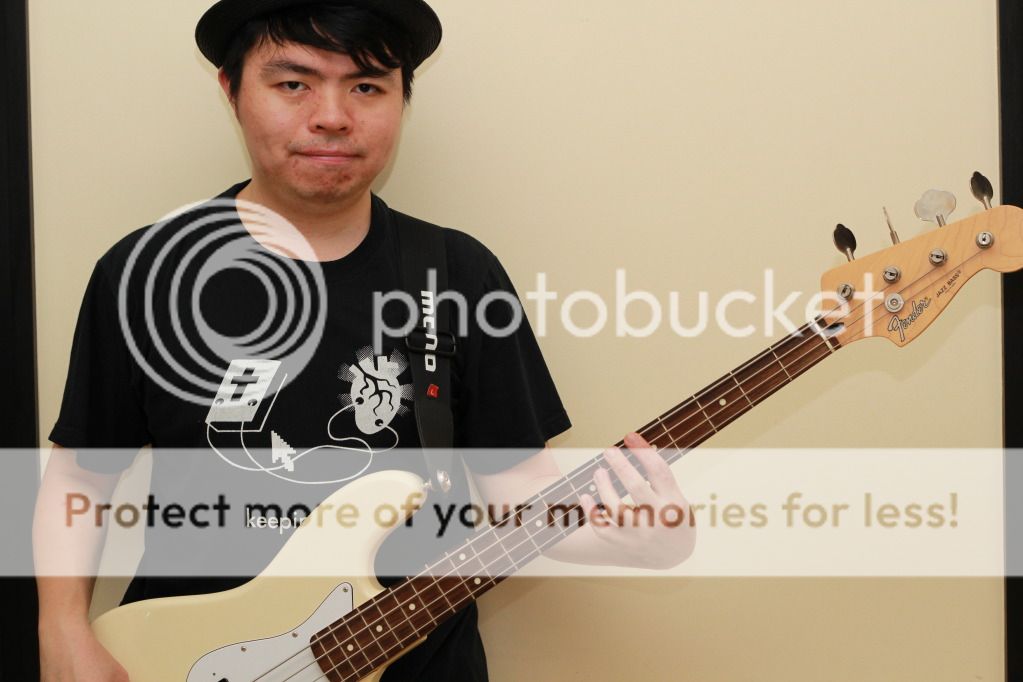
No, it's not a substance, or a new band, or (heaven forbid) new gear--I'm in love with the bass. I acquired a 4-string Fender Jazz bass, and have effectively replaced my practice time usually reserved for guitar with bass DVD's, bass e-books, and bass articles. I've played for two services so far (first ever at a Chinese worship service for New Heart ministries, and the next at AMK), and the response has been encouraging.


Some material I've been working on:
Dave LaRue's "Essential Bass Concepts"
Stu Hamm's "Fretboard Fitness"
George Urbaszek's online videos
Trying to study players like Pino Palladino and David LaBruyere

Tuesday, February 21, 2012

Analog, Digital...Does It Matter?

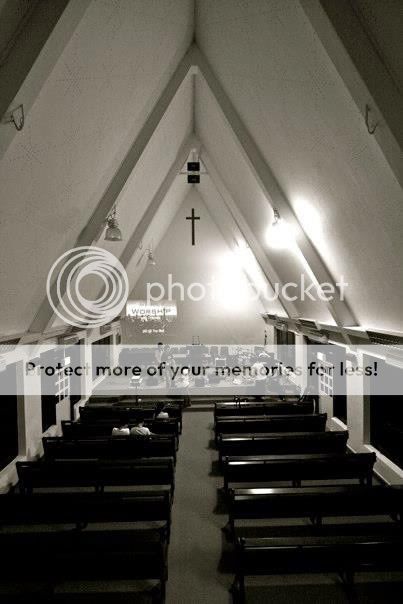
I've been playing worship sessions at a nice cosy church every last Friday of the month for a couple of months now. Hosted by Shalom Baptist Chapel, JAR @ the Well (acronym for Jam and Refresh) intends to deliberately bring worshippers from out of the hustle and bustle of city life and simply enjoy God through worship and music, and it achieves this aim very well because of its location: it's near Tengah Airbase!


The acoustics are amazing; there's a high, tapered ceiling, and the floor's nicely carpeted, which produce nice reflections with not too much pre-delay (carpets absorb sound). Whenever I step into this church, I feel inclined to be silent, to be meditative, and to be wary of my speech because of how small I feel.


My rig for the night was an experimental one: full pedalboard (the one I have mounted on a PT-3) into a Line 6 Spider III. It's a 30W amp with a 12" speaker, which is my preferred wattage and speaker size. I ran it pristine clean with no EQ and no drive to experiment with the concept of relying purely on the pedalboard for tone.


So the night went on, with powerful worship, amazing moments of pure adoration through the music, and all the while, just genuinely having a good time with the rest of the band.


The worship leader came up to me after and asked how much my amp was, expecting it to belong to the "expensive" category. "I love your amp" were her specific words. I guess she wasn't expecting that I paid $150 for it, and that it was a solid state amp.

So, which component was responsible for good tone? The amp? The pedalboard? The fact that I used analog pedals? The more I contemplate about it, the more I think that from a listener's perspective, it doesn't really matter if I used digital or analog. Both types of gear are thus a means to an end: undistractedness in playing. Perhaps the mark of good gear is not just that it sounds good, but it doesn't distract you while you're using it; it becomes an extension of your creativity, and you don't need to fight it to get good tone out of it.

What mattered lay in the generic rather than the specific: did I keep good time with the band? Did I play wrong chords? Did I use the right scale over the right progression?

If you insist on getting a particular piece of gear, by all means, save up, buy it, use it, and don't be distracted by it. Let the gear do its job by helping you express what you want to play.

Photo credits go to the amazing Chang Ning.

Due thanks to the amazing Yi Xin, whose heart for God and worship inspires the rest of us in the band to give and play our best.


Tuesday, December 27, 2011

Deja Vu (Project Serve Welcome Tea)

It wasn't so long ago that a fresh-from-Sydney graduate was introduced to a parachurch organization, and auditioned for a place in the performing arts ministry's Project Serve.

I was mostly charismatic with little knowledge of the bible. I head-banged, jumped at least a foot off the ground, and believed that distortion and worship could co-exist. It was a very heart-driven Christianity for me.

Project Serve changed my life. The heart was reigned in by the mind. The mindlessness was replaced by a constant awareness of God's truth in every act I did, whether in public or in private. The gospel became something to be treasured, to fight for, to defend and not merely something private.

Music was seen for what it truly was; something God graciously gives, an aspect of His creation, and like all good gifts we can either use it well or abuse it selfishly. I began scrutiny of lyrics, and saw that what was said was equally important to what was played. Bands I previously followed couldn't be followed anymore, simply for what they stood for and what they encouraged through their lifestyle and in their songs.

I pray that these young ones will discover for themselves how to live a life pleasing unto God, that all aspects of their giftings, be it in music, sports, media, are all for God's glory. We are to be good stewards of what He gives.

Wednesday, December 21, 2011

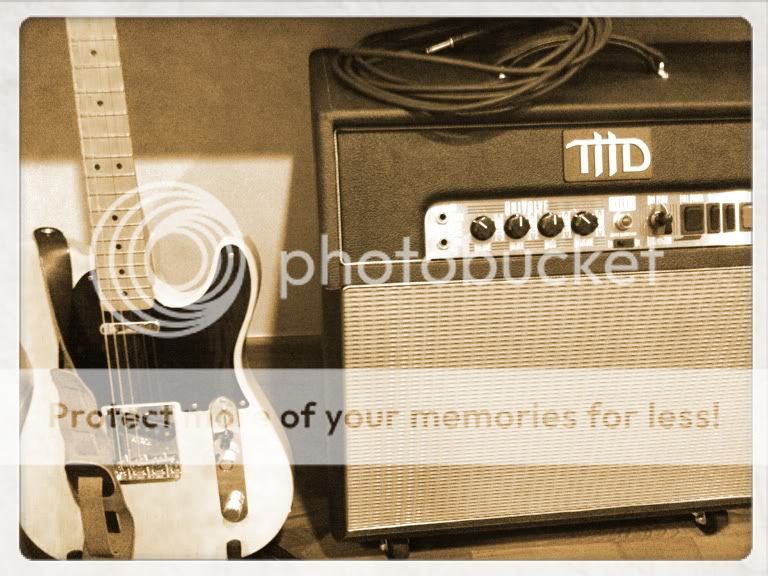
Shredding on a Tele


God is gracious and good. Even in the midst of the wrist injury in my picking hand, He continually provides ways for me to continue playing the guitar, and even improve on my technique to be a player who can play more cleanly. I've only recently realized that my left hand is far stronger than I had previously taken notice of. 
Its legato passages are fluid but defined. When I mute the strings with my wrist, I get a very distinct "chunk" sound out of the muted notes as I make my way across the fretboard. I've also managed to learn how to effectively mute unwanted strings during those long lead lines with my left hand, something I was very bad at doing for the longest time.

Not exactly shred, but it's approaching speeds I could play before in my John Petrucci days.

God is so good. Much thanksgiving is due.

While God works in helping me shape my technique, He's also helping me improve upon my existing setup. After playing with a well-setup low-action guitar, I was really inspired to get a similar feel. I starting watching those who play Teles and can play really fast on it (Andy Timmons, Ritchie Kotzen, even Keith Urban). It just seemed that they had the strength of gorillas to be able to have such volume and articulation.

The thought hit me; what if their guitar action was low? I used to adjust the string height on my Yamahas like crazy just to get that sweet John Petrucci spot, and only avoided it on my Strat and Tele because I figured it would degrade the tone. Besides, wasn't it tonal blasphemy to have a Tele with low action and strung with 9's?

I threw convention out the window. Half an hour's worth of tweaking and retuning yielded some very satisfying results.
As you can tell, there's a fair bit of string posts exposed. They used to be flush with the saddle, meaning that the action was a lot higher. Here are some observations:
  1. The exposed string posts can cut your hand. Yes, now I know why some of my shredder friends don't like Teles. I palm-mute quite a lot, and my hand has to rest where the string posts are. Thankfully, I'm a light picker now with a light touch, so the pressure exerted by the string posts isn't strong enough for me to spill blood.
  2. The strings are closer to the pickups. My bridge pickup immediately sounded a lot hotter, allowing me to play faster passages and retain definition and articulation. The effect isn't as pronounced on the neck pickup.
  3. I can get away with legato passages far more cleanly. Oh yes. Bring on the long passages. I used to be so afraid of them playing on a Tele, but I think I've regained some confidence back.
I shall quote a website about lowering the action on your guitar:

"It'll feel so good you'll play it instead of eating/bathing/sleeping. There won't be anything left of you but bad posture and enough hair to comb over your face."

Further reading:
Hotrod Your Guitar
Setting string action on a Telecaster (eHow)

Wednesday, December 7, 2011

Simplicity

One guitar into one amp. The purest signal possible, with no pedals to suck tone, no power supplies to generate noise, and no patch cables waiting to die on you at the most inopportune time.

I occasionally play with this setup when I know that the venue provides a decent amp (which is a pretty broad category in my book; I'm content with both solid-state and tube amps), or when I know carrying pedals will be inconvenient from my previous engagement, especially when I don't drive for the day. If you're into large pedalboards like me, you'll find it extremely limiting.

All of a sudden, you're stuck with one tone. One. No choice of overdriven to suit the mood. No modulation or delay to thicken the sound. Everything boils down to tone exclusively from the fingers, which can be terrifyingly crippling. Fortunately, I have good news (or bad news, depending on how you take it): the audience isn't expecting much. They're not waiting for the roar of a BB Preamp, or to hear the trailing feedback of the delay pedal. They're not overly impressed with a truckload of pedals hauled onto the stage.

What they are expecting is (insert drum roll) music. Honest, heart-felt, confident, music. Jeff Baxter, one of the biggest gear heads in the history of music (due to his big time session work), has done sessions with gear ranging from a few racks' worth of equipment to recording with a DI straight to the console. He has repeatedly emphasized in his instructional that you make the gear work, not the other way around. There's something inside you, and that should be able to come out with any guitar and through any piece of gear.

So, here are some tips I've learnt along the way about guitar-to-amp setups:

1. Set the tone up overdriven, and use the guitar volume to toggle between a lead and a rhythm tone. This does imply your volume pot is useable in that fashion--my Yamaha's can't do that, so in that situation I wouldn't probably use them.

2. Be aware of your technique. There'll be nothing to cover it up. I admit to being lazy with technique when I have my full pedalboard. With that many overdrive pedals and that high a gain level, I still can sound decent with sloppy finger work.

Sunday, October 23, 2011

Possible Band Names?

YFC's Performing Arts ministry band needs a name. I know my brainstorming sessions for band names don't really have a lot of scriptural backing to them (like attaching a verse directly to them), but I do keep them biblically sound. Here are my suggestions:

Return
This name came about after checking work emails for the umpteenth time, and thinking about a name which revolved around the idea of turning.

When you read your emails, the subject header is the most important part of the message. If you don't get any of what was said in the main body of the email, at least remember the subject header. Likewise, Christians have the most important message to share: the Gospel. If nobody understood the music that was played, or if no one remembered any song that the band dished out, may the listeners remember that the Gospel was shared.

The concept of turning needs no detailed explanation. Responding to the Gospel of Jesus Christ involved a 180-degree turn (maybe the arrow should be halved instead of a full turn?) from my godless ways.

Afterthought:
This sounds like a Korean boy group. In fact, running a search on Google yielded a hit on an existing band with this name--some Norwegian power ballad rock band. I can't pronounce the band members' names.

This Way Up
I thought about this while contemplating ordering a guitar from the US, and hearing the horror stories of how guitars come chipped and knocked about because the distributor didn't package the guitar properly.

A box containing fragile items needs to be oriented in the right way, otherwise, as it moves through two points, you'll end up damaging its contents. We all try to move through life living our own way apart from God, but the truth is, Jesus really is the truth, the way, and the life. No one gets to the Father except through Jesus.

Afterthought:
There's a four-piece party cover band of the same name on Facebook. Sigh.

Some rejected ideas:
  • Driftwood - Named after contemplating that a piece of dead, fallen wood in a river can only be picked up by a lumber, who will use it for nobler purposes like furniture or river dam construction. I thought it was cool, but it sounds like it belongs to a metal band.
  • One Step Closer - Whether Christian or not, we're all taking one step closer to our eventual eternal destiny. Rejected due to a Linkin Park song of the same name.
What do you think makes a good Christian band name? Let's hear it!

Sunday, September 25, 2011

All Things New

I pray that in Your good time,
You may reveal Your glory to these precious ones.

Twitter Delicious Facebook Digg Stumbleupon Favorites More