Dotted Eighth Delay Studies

Setting up the U2/Hillsong delay in a variety of situations.

The Sessionists

Esther Subra (vocals), Serena Chew (keys), Justin (guitars), Alphonsus (drums and percussion)

Thoughts on G.A.S.

Why you should save up for an expensive guitar.

Setting Up Disaster Area DPC-8EZ and DMC-8D MIDI Controllers

An easy-to-follow video tutorial to get those patches programmed!

An Overview of My YouTube Channel

Feel free to browse some of the playlists on my channel. Hopefully this leads to you liking and subscribing!

Showing posts with label Awareness. Show all posts

Thursday, March 7, 2019

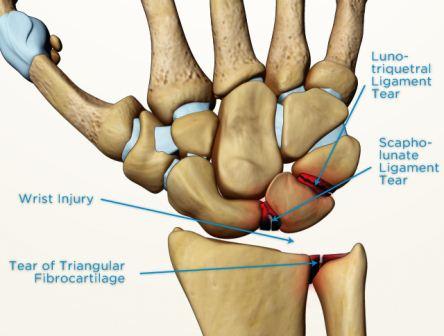
Managing Wrist Injuries as a Guitarist


  1. Get a wrist guard (1:41)
  2. Play with less gear (4:19)
  3. Modify your technique (5:33)
  4. Play an ergonomic guitar (7:35)
  5. Pray for healing! (9:05)
As some of you are aware, I have scapholunate dissociation in both my wrists. It's been a tumultuous journey, with its many days and nights of pain, with a constant cry to God for healing. There have been miracles and the tangible power of God in healing me. There have been moments where I believed God must not love me because of my constant pain.

But through it all, God is good. He has always been good. I may wear a guard now, but in time to come, I will not need it in the new heaven and new earth. But for now, for those fellow guitarists who suffer from wrist injuries, you are not alone, and your pain is not permanent! 

Friday, August 25, 2017

Renewed Reflections on Worship Songs

Allow me to preface this reflection with a confession. I have considered myself an "armchair theologian", and I shall provide a working definition from one who has articulated it before:

"An armchair theologian is also an outsider to “the game”. He looks into the academic community of theologians with a keen interest in the topics being discussed. He knows schools of thought, scholars/preachers/pastors associated with them and so forth. He listens to and reads them whenever he can. He develops opinions of his own about the different subjects. Perhaps he understands he’s an outsider and perhaps he doesn’t. Perhaps he presents himself as a “player” and perhaps he doesn’t."

Why do I bring this up? While an "outsider to the game" of academia (hopefully not for too long), I enjoy the academic rigor of thinking through issues that arise from evaluating lyrics and music in worship songs. I can get quite passionate about the discussion--and sometimes, this passion can be misconstrued as callous candor. I am among people in school who have the same disposition--we chat, we argue, we gesticulate, we get quite animated--but we discuss all in the name of wanting to learn more about the differing positions that each of us holds regarding the topic at hand. In other words, we seek dialogue and mutual discourse.

I have, at times, got carried away with conversations with other people who may not have similar dispositions. Most recently, our church worship ministry underwent a revision to our new song selection process. There were several new songs up for consideration, and part of the process required us to comment on theological content in their lyrics (amongst other things).

I confess I got fired up. Here was a chance to engage in meaningful dialogue! But alas, I forget that I am part of the bigger body of Christ, called to a community that has a variety of people, people who may not find rigorous dialogue meaningful, edifying or encouraging. I might have said some things to provoke thinking, but I'm afraid they might have been provoking instead.

To cut a long story short, my "issues" with some of the new songs were of theology and grammar. I had thought that songs with "bad" theology and grammar must not be used for corporate worship (we are what we sing, I always say). However, an evaluation of whether or not theology and grammar are "bad" is subjective (yet another provocative statement), as my interpretation of songs are according to a framework that I have developed over the years. 

I must recognize that evaluative frameworks are not universal--you have yours, and I have mine. My sin is that of trying to impose mine on yours, and it is not my place to persuade you within the space of a single conversation. By way of self-reflection, I have been asking myself the following questions:

Is the theological content truly "bad", or more aptly "incomplete"?

The songs of my beginnings as a Christian were from the late 90's, with Hillsong and Planetshakers at the forefront of what I thought were normative worship expressions. I could articulate the love, compassion, and mercy of God. With the help of these songs, these concepts transcended from being mere words to an enlivening of my spirit, awakening my senses to the reality that God is love.

The medium of music is certainly the aptest to communicate that God is love. It is a cultural norm for us to hear the ideas of love being communicated through the love song (duh, right?), whether in an upbeat, celebratory tone, or an emotive ballad. In our modern context, it would be rather strange and out of place if we used the love song for instruction. We recognize this when we hear songs that could very well be sermons in musical form.

I think that my present preference for sermons-in-songs (or songs that have more instructional material) colors my view on songs of the heart. Does every song need to be a sermon? Does every song need to teach every aspect of God (or by extension, within the "four songs of the setlist")? Many worship leaders are divided over the answers to these questions, but for the sake of my congregation and my local context, I must admit that the answer should be "no".

If I consider a holistic view of the church, perhaps there are other opportunities to engage the congregation with the other aspects of God. Certainly, within the time allotted in service, each item in the order of service (welcome, prayer, offertory, sermon, benediction) contributes to an engagement of the whole community with God. This does not take into account discipleship classes, small group meetings, prayer meetings, various fellowships; indeed, we have such a wide variety of activities to engage the congregation, so why should we load such a heavy burden onto the song?

Hence, theology expressed in a song isn't necessarily "bad", it is incomplete if read in isolation. We should be asking ourselves how the songs being sung in service fit into the wider context of the church, and if found to be truly deficient, we can seek further improvements from there.

Is the grammar truly "bad", or simply "poetically fluid"?

Grammar is dear to my heart. I'm writing this on the Grammarly web app to double-check my grammar. However, I forget that with music and poetry, there is some measure of fluidity with grammar rules. The rules of Hebrew grammar don't apply very well in Proverbs and Psalms because the authors (songwriters and poets, evidently) bend the rules for word-play, analogies, chiastic structures, and emphases. If I spare the Hebrew scriptures such scrutiny and criticism, perhaps I am too critical of English writers.

On a separate note on Hebrew, let me give a recent example that was very humbling for me. I was very insistent that Chris Tomlin was being a poor grammarian when he wrote the lyric, "the God of angel armies". My auto-correct instinct kicked in and insisted that the line should be "the God of the armies of angels". I thought about it a bit more and realized that Tomlin was referencing the phrase, "The LORD of Hosts", more commonly known to us as "Jehovah Sabaoth":

יְהוָ֥ה צְבָאֽוֹת
(YHWH Z'vaot)

Hebrew is a wonderfully compact language. Z'vaot is difficult to express in English, and Tomlin is actually closer to its meaning than the more archaic term, "hosts". I seek forgiveness from those who were at the receiving end of my "grammar tirade" against this song.

In conclusion, please forgive my callous candor. Songs are not sung in isolation from the rest of the service, so I must recognize the other avenues in the church to teach a complete theology of God. Being rigid with grammar rules takes away some measure of beauty in lyrical prose, so I must recognize the time and place for good grammar.

Soli Deo Gloria.

Friday, March 3, 2017

My Experience with a SingTel Customer Service Officer

If my tone comes across as "the upright, uptight customer", it's probably because there's immense frustration stemming from the recent update of the SingTel app on my phone that keeps crashing.

I don't usually update apps for fear of buggy performance. Well, the SingTel app started crashing on the old version, so I felt like I had no choice but to update to the current 6.4.1. It STILL kept crashing after updating. When it wasn't crashing, there'd be the perpetual spinning circle of doom--so I thought that if I left the app to load, it would eventually load properly.

Nope, it still refused to work. So I have left the phone and the app on to load trying to get it to work on numerous occasions. Lo and behold, I get the warning message AND the notice of data usage within a short period of time. I'm a moderate data user, clocking in 2.5GB per month (with a 3.5GB plan as buffer), so it came as a surprise when my data usage exceeded the cap this month.

I'll let the screenshots speak for themselves.


Wednesday, January 18, 2017

Why Like That: Ok, So How Else Do You Study Hebrew?

I was searching for guides to using my Brown-Driver-Briggs Hebrew lexicon, and stumbled across these videos discouraging its use:


That may very well be that the authors and editors of the lexicon do not share the same vision of biblical inerrancy, and that they hold on to ecumenism to bridge the gap between Catholics and Protestants, but are they really in gross error and in the grip of Satan? Really?

I'm very wary of people who are so quick to paint in broad strokes. How else would you learn and study Hebrew? Do you know every single Hebrew word in the Old Testament?

Hebrew is a beautiful language, but for an English-speaking, non-native learner of the language, it is virtually impossible to figure it out without help. And that's precisely what BDB is, a tool that helps and assists you. You can't encode a lexicon with your views on inerrancy or ecumenism.

Why like that!?

Saturday, July 26, 2014

OAC? Not Quite.


I found a cafe in HK that used the same stock graphic as my band. That's coincidence for you!

It was a bittersweet moment at this cafe as I started thinking about my musicianship. What do I do with these dreams and ambitions of playing professional music? It's amazing that 15 years have passed and I'm still a hopeful dreamer that someday, somehow, God will permit me the opportunity to use my musical gifts in the marketplace.

Many are quick to jump to the conclusion that I seek fame and fortune. I don't. I really don't! And don't take my word only, look at my life and try to arrive to that conclusion.

"Well, OAC was marketed fiercely."

Of course it had to be! I was managing a brand. As it is with any enterprise, you have to push selling points and can't expect clientele to "magically appear". Since no one was going to do it, I stepped up to the plate. Would anyone else have done it differently? I don't think so.

My observation is that so as long as the band isn't identified as Christian (and by that I mean a band made up of Christians who are active in their faith and unafraid of sharing it), it can pursue any material end by any means and it will still be deemed socially acceptable. "Oh yeah, that's what they have to do to survive. It's a tough market."

But alas, if the band is "Christian", all of a sudden, the same things that help promote the band, the publicity and marketing materials, the campaigns for gigs, any kind of merchandising--the band is seeking "fame and fortune" that is "against their beliefs" and are hence "hypocritical". Where is the hypocrisy? What beliefs am I going against? Does the Christian faith espouse a belief (or a set of beliefs) that deny a band from engaging in contemporary marketing strategies? I'm open to discussion on this, but by and large, I am tasked by the cultural commission to be hardworking, to be resourceful, and to be a responsible head of my household. If that means having to make a living with music, I'd better find a way of doing it responsibly!

Why the double standards? Don't "Christian" musicians need to provide for their families as much as "non-Christians" do? Don't we "Christian" bands need to make a living too? I don't mean to sound like I'm ranting (ah, Christians cannot complain either), but it cheeses me off to no end that there is such a divergent view on Christians attempting to live by their art. We're people too, with real needs and real families to take care of.

Tuesday, December 10, 2013

Using Instagram as a Gear-a-holic

I was never one to use Instagram until I started following Matthews Effects and Pedal Projects. These guys post regularly on Instagram as one of their main communication streams to update customers (and fans like me) on their recent work, news, developments, and general updates. They are able to get instant notifications on comments and can respond very quickly to specific posts. I think it's a novel way to use social media to keep in touch with your clientele, especially since guitarists are naturally tech-savvy people!

How does it work?
Like other social media sites, the @ and # tags are integral to the use of Instagram. @ tags are for users, and adding them into both your caption and your comment section will push them a notification that they've been tagged (depending on how they've set up their notifications on their smart devices). This is useful for starting conversations or to "forward" a post to a friend who might be interested in it.

For example, I post a picture of my rig just before a gig:


And if Friend A wants to let Friend B in on the photo, he'll post in the comment like:

"@FriendB check out this guy's EHX LPB-1 and Mooer Shimverb!" (Ok, terrible example, but you get the picture)

Hash tags (#) are to include topics in a post, which will make it searchable by other users. Gear communities like @Gearaholic, @Knowyourtone and @Toneheaven encourage users to # them, which effectively shares the post with the wider community. # can also be used in both captions and comments. Here's a list that I currently use, and feel free to use them in your own posts!

#geartalk
#pedalboardfrenzy
#gottone
#gearaholics
#knowyourtone
#worship
#tonefordays
#toneheaven
#gearwire
#thisismypedaltrain
#globalworship

I see Instagram as a great way to:

1. Get pedalboard ideas
I got quite a few build ideas with my Pedaltrain PT-3 from searching up other users. This can go horribly wrong because it may stir up the GAS in you, so ogle with caution! 

2. Meet other guitarists/pedal makers/manufacturers
I love my country, but it's so small that the gear market only carries "mainstream" stuff. With Instagram, I'm able to contact the makers directly, and they're such a joy to talk to! Notably, Rick Matthews from @MatthewsEffects and Asgeir Helgi from @PedalProjects are great people.

3. Posting/hearing gear demos
@GearDemoGram and @PedalProjects are good examples of how the short video function in Instagram can be used to demonstrate gear, using the iPhone audio as a gauge. I know, it's not the best of audio, but it's decent enough to hear 75% of the pedal's "vibe". It's inspiring me to make use of this medium to 

4. Participate in competitions, give-aways, sales
Boutique pedal makers and mainstream manufacturers make use of the holiday season (or when they're in a good mood) to promote their wares. Most of them require the simple procedure of # the relevant topic, like #trexgiveaway, and tagging other users as a shout-out.

So, if you're a guitarist and want to tap into social media, why not give Instagram a spin? Find me @justicepao (it's the nickname I used when I played DOTA back in my uni days)

For further reading:

Thursday, November 28, 2013

Blog Updates!


I have a blog, a YouTube channel, a Tumblr account, a Twitter account, and it seems like it's in vogue to have an online "blogshop" style website to promote your wares. While I'd like to think I'm not so mainstream as to follow the whims and fancies of the internet, Weebly is a very nice website builder to use!


I have a Weebly website now, at justinchanbp.weebly.com. It's my new site to consolidate my new videos, new tweets, new blog posts, and make it easier for you to contact me!

I've progressively changed all my forum signatures to the Weebly--if you have noticed any dead links, please let me know. :)

Friday, February 1, 2013

Recycling by Repurposing

Being engineering-trained does have its real-life benefits. I'm huge on recycling, which if left unchecked, could lead to a mild case of hoarding, because I see that everything can be repurposed to suit other needs. Yes, they were originally designed to do something else, and they will probably serve their greatest use in that manner, but once the original need has expired, it's such a waste to throw it away.


Take the above two for example. I originally had an external hard disk that gave way a while ago, so the hard disk stand was going to be thrown out until I saw that it could fit my air conditioner remote--so it became an air conditioner remote stand. Not exactly what it was purposed to do, but it sure made a more stylish remote stand.

You know those expensive sweet containers made out of aluminium and over-provided protection for sweets? I found that it was just the right size for my earphones, and this time, the protection was warranted. So my earphones found a new case in the form of an Eclipse sweet container, and I think it's been well protected since!

Take a gift box for a wireless mouse, and it can be fashioned to prop up your wallet, keys, and watch:

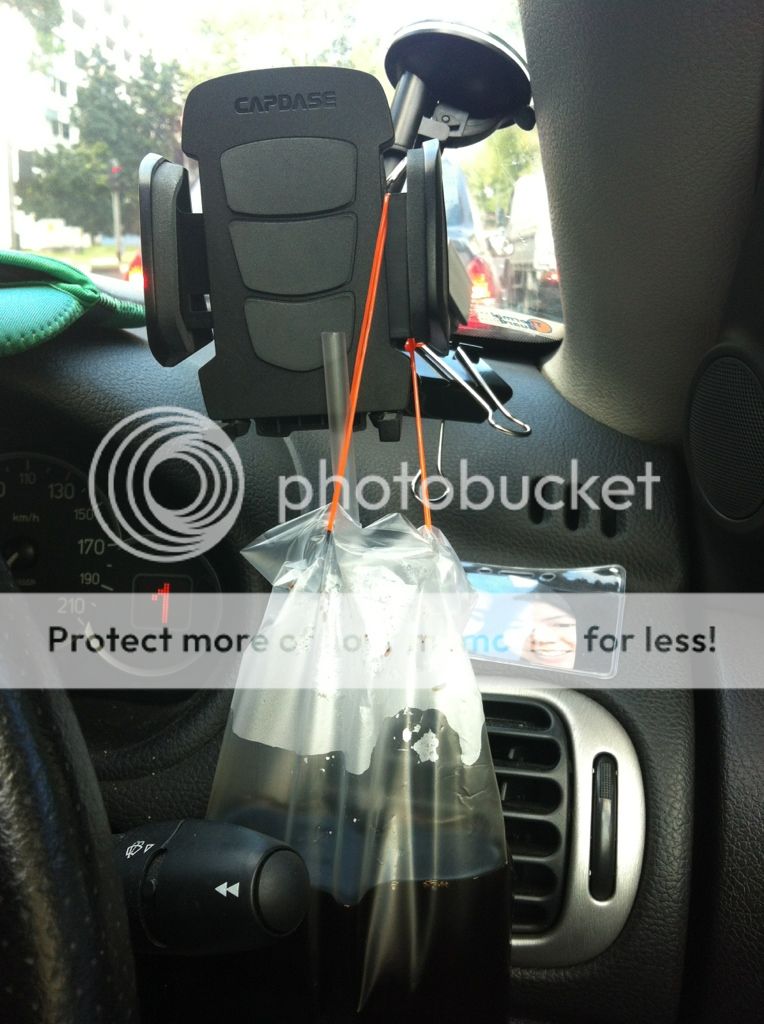
And last but not least, and certainly one of my favorites, here's what I do when I have an open packet of kopi-o and I have no where in the car to put it:


My piece of advice: something of no purpose (or expired purpose) can find purpose again. It's a matter of finding it.

Monday, September 17, 2012

Going Fender


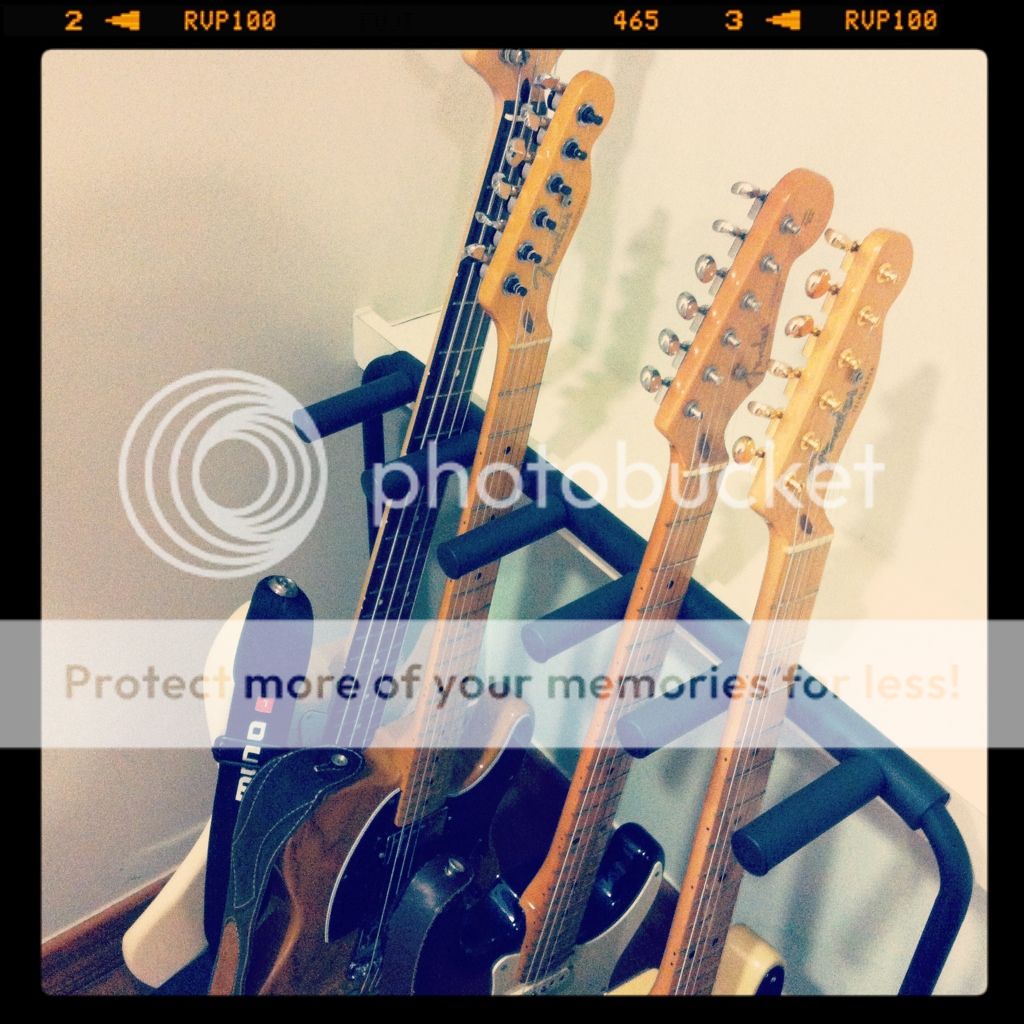
Fender guitars used to bear the brunt of my guitar manufacturing criticisms. For a design which has essentially gone without much significant revision, I concede that Leo Fender got part of the formula right. I use the term "part" because the design isn't perfect. There are obvious flaws with the solid-body electric design: early '50s models can only make truss rod adjustments by removing the neck first, the V-shaped neck is awkward to grip initially, the tiny frets meant you have to be precise and fret lightly, and true single coil pickups have worse grounding than the cheapest radio you can buy.

When faced with these problems, guitarists can choose to react in one of two ways. Firstly, they can avoid the problem altogether. It is certainly a more natural solution to find guitars which address and correct the flaws. Parker and Steinberger guitars, for example, have far superior playability, durability, balance, and features. Adrian Belew of King Crimson made the switch from Fender (most notably known for his iconic pink strat) to Parker because they "have none of the inherent problems and make [him] play better". 

On the other hand, guitarists can accept the flaws and work around them. I have personally gone through this route and can attest: it's a lot of hard work. To play fast and fluidly on a strat requires one to be precise and accurate with a light touch in both hands. Your left hand has to accommodate the neck profile and small frets by bending in a certain way. Your picking hand has to play around the pickup spacing and slanted bridge pickup, being careful not to knock into the volume knob.

To cut a long story short, I think by accepting and accommodating these flaws, I've ended up becoming a better guitar player. I was a very heavy player with a heavy hand who came from a metal background, so when the time came to retire from that particular scene, I needed guitars that were suited for far more mellow music. Acquiring my strat and tele has lightened up my touch tremendously, and that has made me far more dynamically-sensitive.

Perhaps most pertinent to a GAS-prone guitarist is that you'll have to acquire more gear to get a single coil to really sing. They aren't as beefy as their humbucker counterparts, and they tend to have this shrill treble bite to them which isn't too appealing in a modern musical context. My personal solution was to stack my overdrive pedals with some EQ to roll off that high end, both on the guitar and on the amp side. I think this has had the side effect of making everyone's single coil tone unique, in that people use different configurations of pedals and amps to achieve an entire spectrum of tone, from full and fat to thin and shrill.


My simple exhortation to those dismissive of Fender guitars is to try them out. Take a vintage guitar out for a spin. You just might be very pleasantly surprised.

For further viewing:
Dave Hunter and Carl Verheyen demonstrate telecasters

Carl Verheyen demonstrates his stratocaster

Wednesday, August 29, 2012

Tone Revision 3 (aka The Never-ending Story Part 20-Something)

There's a very high turn-over rate of pedals on my pedalboard. I've downsized from this:

Mounted on a Pedaltrain Pro, mid 2011

To this:

Mounted on a Pedaltrain 3, late 2011
I got rid of the Biyang pedals, not that they sounded bad, but I just didn't need two choruses and two delays (my Deluxe Electric Mistress can achieve tones from a mild chorus to a faux Leslie). The Biyang Chorus also added a lot of background noise even when disengaged, which I'm told is normal for certain mod pedals. The stacked delay sound was nice, but nobody could tell the difference when I used it.

I got rid of the equalizer because I realized I could make do with the EQ on my overdrive pedals, and there was some noise coming from it. (It appears that the pricier your pedal, the less likely it will have noise in the chain. Something I should have known a long time ago.) I sold off the GR-20 'cause I realized I should concentrate on being a better guitarist than trying to sound like every other instrument.

And now, my pedalboard looks like this:
This installment saw
  • Replacements: I changed from a Korg DT-10 to a Pitchblack for its smaller size, and changed the AC Booster to a BB Preamp, which I much preferred.
  • Arrangement: All my drive pedals are on the lowest tier, to help in visualizing the signal flow.
  • Additions: A SansAmp GT2 for amp simulation when I don't have an amp, and a Visual Sound H20 for an extra layer of chorus and delay. 
Yes, I'm back to two choruses and delays. But I got the H20 because I originally wanted to use it just for my Taiwan gig and needed those sounds in a relatively small, combined enclosure. I then found a way of hooking it up and squeezing the pedalboard arrangement so that I now have no more space for any new pedals. In all honesty, the pedalboard turn-over stopped when I finally ran out of pedalboard real estate.

How do you stop your pedalboard turnover? And in a related question, when does your GAS stop?

For further viewing (my Quick Question on GAS):

Thursday, July 7, 2011

Why Like That!? Episode 2

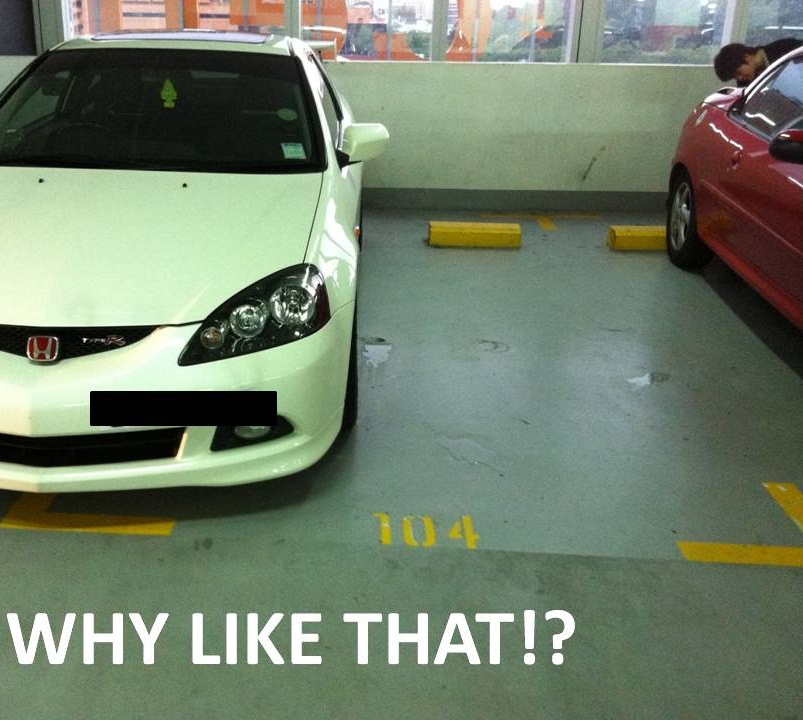
Multi-storey carparks are difficult to park in; they're tight, they're congested, and they need quick hands to navigate the bends around corners to reach the next level in a bid to find an available lot.

I can understand the level of agitation one may feel at the end of the process, but that's not an excuse to be inconsiderate to other drivers:

I may not know the circumstances behind the driver deciding to make such a hasty parking, which may be legitly urgent, but I think spending 30 seconds more to park properly wouldn't make a difference to the situation, would it?

Monday, July 4, 2011

Why Like That!? Episode 1

A brand new segment of this blog to commemorate the moments that make us drivers go, "Why like that!?"

For this inaugural post, I present to you a parking specimen:


I hope my tone of exasperation is warranted when I say that this guy is too far from the kerb! Private estates have narrow roads to begin with, so it is imperative to park as close to the kerb as possible, not just for other road users to pass, but also for the behemothal rubbish truck to safely pass through the estate when it makes its rounds in the morning. If the truck comes across a bottle neck (caused by, for example, the above), it will not risk scratching the car and give the houses after a miss.

In my book, that's incredibly inconsiderate.

Twitter Delicious Facebook Digg Stumbleupon Favorites More