Dotted Eighth Delay Studies

Setting up the U2/Hillsong delay in a variety of situations.

The Sessionists

Esther Subra (vocals), Serena Chew (keys), Justin (guitars), Alphonsus (drums and percussion)

Thoughts on G.A.S.

Why you should save up for an expensive guitar.

Setting Up Disaster Area DPC-8EZ and DMC-8D MIDI Controllers

An easy-to-follow video tutorial to get those patches programmed!

An Overview of My YouTube Channel

Feel free to browse some of the playlists on my channel. Hopefully this leads to you liking and subscribing!

Showing posts with label Contemplation. Show all posts

Friday, February 28, 2020

Lent 2020: I'm Giving Up Facebook, Instagram and Twitter

We are in the season of Lent, which is normally marked by penitence, contrition, and focusing on Christ as we contemplate His passion and death. This year, I'm going to try and give up my favorite social media apps: Facebook, Instagram, and Twitter.

Egad. Lord, give me strength to keep my resolve.


Friday, December 28, 2018

Shifting from Dayre...Again

Dayre announced that it was shutting down, which led me down a road of beefing up my Tumblr to get it looking the way it does now. Then Dayre didn’t get shut down, and I was in this weird limbo phase of managing yet another blog.

Then they announced a transition in management, and now Dayre is going to be marketed as a women’s lifestyle blogging platform.

Long story short, I’m back to being on Tumblr and Blogspot.

Friday, August 25, 2017

Renewed Reflections on Worship Songs

Allow me to preface this reflection with a confession. I have considered myself an "armchair theologian", and I shall provide a working definition from one who has articulated it before:

"An armchair theologian is also an outsider to “the game”. He looks into the academic community of theologians with a keen interest in the topics being discussed. He knows schools of thought, scholars/preachers/pastors associated with them and so forth. He listens to and reads them whenever he can. He develops opinions of his own about the different subjects. Perhaps he understands he’s an outsider and perhaps he doesn’t. Perhaps he presents himself as a “player” and perhaps he doesn’t."

Why do I bring this up? While an "outsider to the game" of academia (hopefully not for too long), I enjoy the academic rigor of thinking through issues that arise from evaluating lyrics and music in worship songs. I can get quite passionate about the discussion--and sometimes, this passion can be misconstrued as callous candor. I am among people in school who have the same disposition--we chat, we argue, we gesticulate, we get quite animated--but we discuss all in the name of wanting to learn more about the differing positions that each of us holds regarding the topic at hand. In other words, we seek dialogue and mutual discourse.

I have, at times, got carried away with conversations with other people who may not have similar dispositions. Most recently, our church worship ministry underwent a revision to our new song selection process. There were several new songs up for consideration, and part of the process required us to comment on theological content in their lyrics (amongst other things).

I confess I got fired up. Here was a chance to engage in meaningful dialogue! But alas, I forget that I am part of the bigger body of Christ, called to a community that has a variety of people, people who may not find rigorous dialogue meaningful, edifying or encouraging. I might have said some things to provoke thinking, but I'm afraid they might have been provoking instead.

To cut a long story short, my "issues" with some of the new songs were of theology and grammar. I had thought that songs with "bad" theology and grammar must not be used for corporate worship (we are what we sing, I always say). However, an evaluation of whether or not theology and grammar are "bad" is subjective (yet another provocative statement), as my interpretation of songs are according to a framework that I have developed over the years. 

I must recognize that evaluative frameworks are not universal--you have yours, and I have mine. My sin is that of trying to impose mine on yours, and it is not my place to persuade you within the space of a single conversation. By way of self-reflection, I have been asking myself the following questions:

Is the theological content truly "bad", or more aptly "incomplete"?

The songs of my beginnings as a Christian were from the late 90's, with Hillsong and Planetshakers at the forefront of what I thought were normative worship expressions. I could articulate the love, compassion, and mercy of God. With the help of these songs, these concepts transcended from being mere words to an enlivening of my spirit, awakening my senses to the reality that God is love.

The medium of music is certainly the aptest to communicate that God is love. It is a cultural norm for us to hear the ideas of love being communicated through the love song (duh, right?), whether in an upbeat, celebratory tone, or an emotive ballad. In our modern context, it would be rather strange and out of place if we used the love song for instruction. We recognize this when we hear songs that could very well be sermons in musical form.

I think that my present preference for sermons-in-songs (or songs that have more instructional material) colors my view on songs of the heart. Does every song need to be a sermon? Does every song need to teach every aspect of God (or by extension, within the "four songs of the setlist")? Many worship leaders are divided over the answers to these questions, but for the sake of my congregation and my local context, I must admit that the answer should be "no".

If I consider a holistic view of the church, perhaps there are other opportunities to engage the congregation with the other aspects of God. Certainly, within the time allotted in service, each item in the order of service (welcome, prayer, offertory, sermon, benediction) contributes to an engagement of the whole community with God. This does not take into account discipleship classes, small group meetings, prayer meetings, various fellowships; indeed, we have such a wide variety of activities to engage the congregation, so why should we load such a heavy burden onto the song?

Hence, theology expressed in a song isn't necessarily "bad", it is incomplete if read in isolation. We should be asking ourselves how the songs being sung in service fit into the wider context of the church, and if found to be truly deficient, we can seek further improvements from there.

Is the grammar truly "bad", or simply "poetically fluid"?

Grammar is dear to my heart. I'm writing this on the Grammarly web app to double-check my grammar. However, I forget that with music and poetry, there is some measure of fluidity with grammar rules. The rules of Hebrew grammar don't apply very well in Proverbs and Psalms because the authors (songwriters and poets, evidently) bend the rules for word-play, analogies, chiastic structures, and emphases. If I spare the Hebrew scriptures such scrutiny and criticism, perhaps I am too critical of English writers.

On a separate note on Hebrew, let me give a recent example that was very humbling for me. I was very insistent that Chris Tomlin was being a poor grammarian when he wrote the lyric, "the God of angel armies". My auto-correct instinct kicked in and insisted that the line should be "the God of the armies of angels". I thought about it a bit more and realized that Tomlin was referencing the phrase, "The LORD of Hosts", more commonly known to us as "Jehovah Sabaoth":

יְהוָ֥ה צְבָאֽוֹת
(YHWH Z'vaot)

Hebrew is a wonderfully compact language. Z'vaot is difficult to express in English, and Tomlin is actually closer to its meaning than the more archaic term, "hosts". I seek forgiveness from those who were at the receiving end of my "grammar tirade" against this song.

In conclusion, please forgive my callous candor. Songs are not sung in isolation from the rest of the service, so I must recognize the other avenues in the church to teach a complete theology of God. Being rigid with grammar rules takes away some measure of beauty in lyrical prose, so I must recognize the time and place for good grammar.

Soli Deo Gloria.

Tuesday, May 9, 2017

Benign Trivialities


Call it what you will--1st world problems, benign trivialities, minor irritations--but they are still anger-inducing and cause great distress. My car got reared into by a Malaysian cab driver when I took my in-laws to JB. I experienced terrible customer service from an electronics store that gave me wrong labels for free gifts and wouldn't pick up my calls, and I couldn't do anything at the redemption center, which was a 20-minute drive away from home. I have numerous defects in my new home that require laborers to come in and rectify.


And of course, with a new home, comes all the relevant paper work to keep the machine running. Bills, taxes, groceries, insurance, conservancy charges keep coming at me. Unpaid (and yet unclaimed) expenses from the renovation come back to haunt me.

"This is nothing, you're being soft."


This, and a night of worship coming up on Saturday, with no time to practice because I have papers to submit, which I have no time to write because I'm handling all this nonsense. And the noise from renovation in the units that surround mine.

I happened to glance at an Instagram feed of an "internet guitar star". Yes, power chords and sloppy lead guitar playing can get you multiple endorsements, a towering 3-storey house, a wife and 3 kids.

Lord, this is so unfair.

At least, that's what my heart is crying out. But I know that for every trivial rant I put up here, there are a thousand legitimate problems people go through that are unnoticed, and they're genuinely struggling. Yes, I know. It's unfair that I get to rant about "1st-world problems".

Lord, help calm my anger with the Holy Spirit's presence. Transform my anger into thanksgiving and praise.

Thursday, March 16, 2017

MJT VTS "Andy": My First Heavy Relic Strat

Meet Andy, an MJT VTS strat I recently acquired from a fellow worship guitarist.


For the non-musicians reading this, I can nearly hear you scream, "So ugly!" This was precisely my dear wife's reaction when I revealed that I had bought this. She couldn't believe that there is a market for "relic" guitars, instruments made to look far older than they actually are. She thought someone had thrown this guitar down a flight of stairs. She also said that if I used this on Sunday morning, the congregation will think that I don't take care of my belongings!


When compared to my other strats, yes, it does strike me that Andy looks really beat up. In fact, Kaede (the maple neck '57 reissue to her left) is a 1993 build, making her 24 years old this year. Andy is supposedly only 2 years old!


On closer inspection, yes, Kaede must have found the fountain of youth. So, why did I buy such an "ugly" guitar? (Well, besides the fact that I am a huge Andy Timmons fan!) I'm reminded of a meme that goes like this:


A relic-ed guitar reminds me of the fact that the guitar is meant to be played. It makes me want to practice even harder so that my skill matches the amount of abuse on the guitar. Of course, the argument can be made that you should be practicing (and taking care of your instrument), but a clean, well-maintained guitar can give the impression that you've never touched the guitar. Which of course is closer to the situation in reality; I can barely squeeze in 5 minutes of practice a day!

I feel inspired to practice more, perhaps not as much as I used to (I won't be able to top 8 hour practice regimes anymore), but to be intentional and disciplined in my practice. I could play clean 16th notes at 200bpm before, so I know I have much more latent potential in me. Onward to practice!

For further reading:
http://mjtagedfinishes.com/

Thursday, August 18, 2016

A Major Update!


So I'm supposed to be studying but the lighting conditions are far less than ideal, so I'll take a little break to blog before moving up to my room where I have much better lights (but also much more distractions). Here's the update of my life for the past few months, so I'll be concise and share the relevant stuff.

Study, study, study!

The biggest update is that I've stopped work at AMKMC and am now a full time theological student at Trinity Theological College. I'll let some of these photos do the talking for me:

Orientation Day was packed.
My class is huge!
At the TTC chapel, where I go for chapel services, a staple part of student life.

The Hebrew Aleph-bet (alphabet), which we had to memorize on the first day.

Genesis 1:1 in Hebrew.

Church history class.

This year's CSCA lectures with Dr. Simon Chan on "Subversive Liturgy".

Random picture of Jumbo sleeping under my car while taking a break from studying.
Our visit to St. Mary of the Angels for our Field Education.

Reading my Mission and Evangelism textbook with a book stand to alleviate some of the "eyeball aches" I've been getting recently.

A view of the chapel from the back (where I'm usually now since undertaking AV responsibilities).

I've completed my first year Old Testament and Theology courses, so "by right" I should have more time to study than my fellow first year sufferers. But the truth is, I feel like I don't. I'm discovering that in order to retain information, I can't read at my usual pace. I miss out a ton of details! With Thursday mostly free and Friday all to myself, I pray that I will be able to catch up with my friends who are so well-adept at reading and writing. You can keep me in prayer for:

  • Church History - I'm really quite bad at geography and remembering places!
  • Hebrew 1 - 'Nuff said.
  • Mission and Evangelism - A mountain of readings, and a lot of group projects. Thankfully, my group mates are amazing!
  • New Testament 1 - The hardest for me so far. Our textbook isn't the friendliest and I've had to read up or watch other lectures to make sense of what the author of our textbook is trying to say.

Gigs and gear adventures

By the grace of God, I'm still able to get some vitamin M (music) in my system. My ministry "swan song" was serving on a worship team at this year's YMEFLC (Young Methodist-Evangelical Free Leaders' Conference), which I had the immense privilege of playing through a Fender Deluxe Reverb. Tonal bliss!

My amp sim became a mute switch. What a beauty of an amp!
In September, I'll be performing with some pals of mine I've come to admire and respect at Blujazz. Ivni and Wai Yee are blind musicians and are part of an annual concert at Blujazz (Ivni is a drum student at Bossworkz Music School, and yes, he is a blind drummer!) and I've had the privilege of meeting them to play on their bands for the past two years. It's a humbling experience to play alongside them because they show me that music transcends boundaries, even physical ailments.

I didn't have time to take a picture of them, but here's a shot of me rehearsing with an iRig Pro interface and using my phone as the effects processor.


Also, I think I've discovered that there is no way to achieve high gain tones through analog pedals unless you have a decent high-gain amp--which I will never own. Hence, my recent acquisition of iRig gear to play heavier stuff: and I'm mightily impressed! How I wish this technology was available to me when I was starting out! iRig equipment makes the multi-fx style of gear much more accessible for the beginner guitarist.


Soli deo gloria. Now, back to studying!

Thursday, April 23, 2015

"What The Heck" and Spontaneity in Worship

I had a moment with the Holy Spirit, which prompted me to segue into a song I hadn't planned in my setlist. I could feel everyone hop onboard that moment, and there we were, singing our hearts out, some praying in tongues, others, like me, singing from the depths of my tiredness, sorrow and pain a new song of praise and worship.

And when the moment passed and it was time for me to hand over the time, I got that look from one of the authoritarian Megalomaniacs in our midst: "What the heck are you doing?" (I've heard him use harsher terms on me before.)

Let me share from my heart (a rarity for me, but something I am embracing if I am to be authentic).

If authentic worship means being open to how the Spirit moves, and being ready to pour my heart out like an offering unto God, I don't see why I am being judged for obeying the Spirit. I hear Jesus calling me out to be raw and real. I hear the Spirit singing alongside my offering of worship. I sense the Father's smile as He looks on His worshipful children.

Sure, it wasn't planned. That's precisely why it's authentic. You won't hear my heart's cry when I'm rehearsed. But you see, that's the way God has wired me. I am made to worship in a certain style, in a certain setting. There is as much validity in spontaneous, raw worship as in traditional, quiet liturgy--all are expressions of worship God longs for us to engage in to meet with Him!

I challenge every worship leader to be conscious of how God has made you to lead. Are you in the traditional stream? Then craft corporate prayers to the glory of He who hears our every cry. Are you in the contemporary stream? Then let your worship flow with the fullness of the Spirit, letting your songs and dance and thoughts bring everyone towards the jubilant expression that God takes delight in.

Saturday, September 27, 2014

Rant: How To Make a Great Night of Music a Complete Turn-off

I played at Blujaz cafe for an adhoc band put together to support Ivni, a blind drummer (Yes! Blind! He has trumped all other drummers I know) who's a drum student at Ben Lee's drum school.

It was meant to be a great night of music, where students showcase what they've learnt in school. Our band was meant to take stage at 8.45pm--as of writing, there's a band that's been playing since and it's now 9.21pm. I'm not one to complain, but I really felt cheesed off by these young punks. They misunderstood the intention of the gig and made the show about them. Seriously? A night dedicated to music students, giving them the opportunity to experience a live gig, and you pull off this stunt?

"Hi, we're _________ and we're here to play some music for you tonight. Thanks for coming down to support us!"

No. We're not here to support you. If you had any integrity, you would have said something more along the lines of:

"Hi, we're _______ and our drummer ________ is actually learning drums from the school, we're here to support her. Let's encourage ________ !"

I believe the appropriate Singlish term for what I witnessed with this band is buay pai sei. How shameless can a band of young punks get? Let's see:
  1. You certainly took your time setting up. Oh yeah, I was counting. You didn't need to bring your three electric guitars, massive pedalboards, your MIDI-controlled keyboard and sound module. Could you not have simplified the setup for this gig, especially since there were many students waiting their turn to perform? Can't you tweak the existing setup that's there?
  2. You were all fancy-smancy with working the crowd. I get it that you're a young band. I get it that gigging at legit places is hard to come by. But you didn't have to do the long introductions, regale us with the story of how your band met, and give special thanks to your parents/girlfriends/significant others/cats/dogs/hamsters for inspiring you.
  3. And when you finished your jaw-dropping performance (again, I don't normally bash bands or other musicians, but you guys were not as fancy as you made yourselves out to be), you took your time tearing down your equipment. Hurry up!
By the time we took the stage, it was nearly 9.40pm. This band played something like 5 long songs complete with dual-guitar solos and keyboard solos.

Wah lau. Sibei puay sai lei you all! Come back when you're old enough to see that performing isn't all about you all the time.

Thursday, July 31, 2014

A Wake, A Concert, A Dreamer


I conducted a wake service on Sunday evening and helped out at a funeral on the Hari Raya public holiday. It was such a humbling experience and I am truly honored to be granted the opportunity to minister to the bereaved and grieving.

But to be honest, there was much fear and trembling when I was given this responsibility. I had never conducted a wake before (and by that I mean leading the service in worship, preaching, and giving the instructions to pay respects), so of course, some measure of nervousness was to be expected.

Perhaps the moment of greatest anxiety came when I happened upon some Facebook updates of a worship concert that was taking place on Saturday night while I was preparing the sermon, and my friends were serving there. "They have it easy, I wish I was worshipping on the guitar."

God was quick to give His clear instruction, "I've given this to you to do. This is your ministry."

So I prayed continually for strength and courage, and boy, did the Holy Spirit supply in abundance. I felt the familiar sense of empowerment that was not of my own. And as the moments passed, I ended up enjoying the process of preparation. I loved crafting the sermon, digesting the wonderful words of Psalm 23 and listening to the Spirit. I was worshipping with the songs I had chosen for the time of worship. As much as I was to be a minister to people, I was being ministered to.

So the moment came when I had to conduct the service. I still felt nervous, but there was a strength and assurance that was unmistakably from God. Did I do a perfect job? Nope; I slipped up on a few words of my script, my personal ad-lib was far from eloquent, and as always, I sometimes let my mind race too fast for my words to catch up.

But there was a connection I had with God and with the "congregation" of people gathered at the wake. I can't describe it very well, but it felt like my actions and my words were a pair of spectacles to help people see God for who He is, our provider of comfort, strength and hope when it hurts the most. The emotional response as a result of understanding those words choked me to tears; I felt grieved at the loss, but I had a joy that our dear brother in the Lord is secure, and we shall be reunited when Christ comes again.

I may feel inadequate in many things and at many times. But I'm discovering and experiencing first-hand that it is precisely those moments that God chooses to empower me, so that I may not boast. Indeed, in my weakness is His strength complete.

Psalm 23:6
Surely your goodness and love will follow me
          all the days of my life,
and I will dwell in the house of the LORD
          forever.

Saturday, July 26, 2014

OAC? Not Quite.


I found a cafe in HK that used the same stock graphic as my band. That's coincidence for you!

It was a bittersweet moment at this cafe as I started thinking about my musicianship. What do I do with these dreams and ambitions of playing professional music? It's amazing that 15 years have passed and I'm still a hopeful dreamer that someday, somehow, God will permit me the opportunity to use my musical gifts in the marketplace.

Many are quick to jump to the conclusion that I seek fame and fortune. I don't. I really don't! And don't take my word only, look at my life and try to arrive to that conclusion.

"Well, OAC was marketed fiercely."

Of course it had to be! I was managing a brand. As it is with any enterprise, you have to push selling points and can't expect clientele to "magically appear". Since no one was going to do it, I stepped up to the plate. Would anyone else have done it differently? I don't think so.

My observation is that so as long as the band isn't identified as Christian (and by that I mean a band made up of Christians who are active in their faith and unafraid of sharing it), it can pursue any material end by any means and it will still be deemed socially acceptable. "Oh yeah, that's what they have to do to survive. It's a tough market."

But alas, if the band is "Christian", all of a sudden, the same things that help promote the band, the publicity and marketing materials, the campaigns for gigs, any kind of merchandising--the band is seeking "fame and fortune" that is "against their beliefs" and are hence "hypocritical". Where is the hypocrisy? What beliefs am I going against? Does the Christian faith espouse a belief (or a set of beliefs) that deny a band from engaging in contemporary marketing strategies? I'm open to discussion on this, but by and large, I am tasked by the cultural commission to be hardworking, to be resourceful, and to be a responsible head of my household. If that means having to make a living with music, I'd better find a way of doing it responsibly!

Why the double standards? Don't "Christian" musicians need to provide for their families as much as "non-Christians" do? Don't we "Christian" bands need to make a living too? I don't mean to sound like I'm ranting (ah, Christians cannot complain either), but it cheeses me off to no end that there is such a divergent view on Christians attempting to live by their art. We're people too, with real needs and real families to take care of.

Thursday, October 24, 2013

Non-lexical Vocables in Worship: An Opinion


Have you heard of "whoa's" used in worship? There's a whole influx of modern worship songs that have this as a way to bridge between the lyrics. I know there's a whole theology of worship associated with non-lexical vocables (not proper words, almost onomatopoeia), and I agree that there is a way to worship God with these, but I personally think that "whoa", "oh", "yeah", "ooo" and other variants from the modern context of contemporary music have a greater difficulty finding its use in worshiping God.

Non-lexical vocables are usually derived from a culture's specific language. They usually have a cultural association attached to the "meaningless" syllables. Christian converts in these countries will very likely take these same syllables, recontextualize them in worship music, and in so doing attach new meaning to them. The entire process is culturally rich, serving the purpose of using the existing cultural vocabulary in the new context of worshiping God.

Here's why I think the contemporary appears less palatable: we usually associate "whoa", "oh" and "yeah" with mindless pop music. Sometimes, they're used to good effect (for example, a song that helps to rally people together), but most of the time, they sound like the lyricist ran out of creative juices and had 30s of air time to fill in the gaps in the song.

Maybe my opinion is a little biased because I firmly believe that if something is meaningless, it shouldn't be there to clutter up what is meaningful. I am a strong believer that any song used on Sunday morning to worship God should primarily be didactic: it should cause the believer to be reminded of an aspect of God that they find difficult to express into words.

For further reading:

Thursday, October 10, 2013

When Spiritual Sensitivity and Biblical Knowledge Converge (John 1:47-51)

John 1:47-51
Jesus calls Nathanael

47 Jesus saw Nathanael coming toward him and said of him, “Behold, an Israelite indeed, in whom there is no deceit!” 48 Nathanael said to him, “How do you know me?” Jesus answered him,“Before Philip called you, when you were under the fig tree, I saw you.” 49 Nathanael answered him, “Rabbi, you are the Son of God! You are the King of Israel!” 50 Jesus answered him, “Because I said to you, ‘I saw you under the fig tree,’ do you believe? You will see greater things than these.” 51 And he said to him, “Truly, truly, I say to you, you will see heaven opened, and the angels of God ascending and descending on the Son of Man.”

v47
Nathanael didn't need much to be convicted of the deity of Christ. That our Lord Jesus calls him by the title "an Israelite indeed, in whom there is no deceit" is indicative of Nathanael's devotion to his Jewish heritage. He probably knew the Jewish scriptures very well, and like many Jews of his time, he would be looking forward to the coming of the Messiah.

v48
"How do you know me?"

There is a difference to being doubtful and being discerning. We are so easily led astray by skillful displays of natural prowess--how much more so when we are faced with supernatural prowess! Nathanael, like any good steward of truth, wanted to enquire, test and examine. Particularly for us who are in the end times, where false "Christian" spirituality is rife, we need to be discerning of everything we come into contact with, be it theology, testimonies of miraculous healing, or supposed dreams and visions from God.

v49
Some people are born with less ability to discern the spiritual, but they are compensated when they read and are convicted by the Word. Others are so attuned to the Spirit that listening and obeying God's voice comes easier, but their ability to glean truth from the Word is limited. Thus, keen spiritual awareness coupled with a good working knowledge of the scriptures helps one to perceive the workings of the spiritual dimension.

v50
Nathanael is promised that he will see greater things not because Jesus will exclusively show these to him, but rather, because of his acute awareness of Christ, he will be one of the quickest to identify God's fingerprints in His handiwork.

v51
Jesus gives Nathanael an illustration from Genesis 28:12, where Jacob is shown the dream of an open-access to God by means of a ladder extending from heaven to earth. By superimposing the imagery, Jesus is essentially saying that He will be the fulfillment of open-access to the Father. He is the ladder, and everywhere that Jesus goes, He will turn the place into a "New Bethel".

Thursday, August 29, 2013

How Can Non-Christians Be Better Behaved than Christians?

Have you ever come across a person who genuinely loves the poor, engages in much social work for the less-privileged, and beams with such warmth and grace that you conclude that he must be a Christian? Have you then come to a huge shock to discover that he actually isn't? I know many people who make better Christians than me. They exhibit such good Christian graces that it puts me to shame.

Perhaps we make the mistake of directly linking our behavior to our nature. I don't think we realize that in examining a person's religious inclination to Christianity, there are actually two types of proof required. On the surface, we observe what I shall call suggestive proof of Christianity. What is this person's character, personality and behavior like? How do his actions correspond to what we would expect of a Christian? To use Christian religious jargon, we attempt to see if this person has the "fruits of the Spirit".

The problem with suggestive proof is that it can be misleading. Allow me to illustrate: let's say you come across a cat. It has soft fur, it makes a purring noise and it shakes its tail. You could say that its behavior suggests that it is, indeed, a living cat. However, upon closer inspection, you realize that there's a battery cover underneath its fur, and once you remove the battery inside the cat, it no longer purrs or shakes its tail. It actually is a mechanical cat, endowed with the characteristics that mimic a living cat.

Hence, we see that given two cats, both exhibiting behavior characteristic of a cat, we must see underneath the fur to examine if the cat has cat parts or mechanical parts to determine their true nature.

Behavior and nature are two separate issues. Yes, they can be inter-linked, and one can be used as evidence for the other, but behavior is only suggestive proof at best. The second layer of proof is what I shall call conclusive proof of Christianity, and that is a far deeper issue than behavior. It requires us to look underneath the fur, and that is a domain reserved exclusively to God and His spirit. On our own accord and by our own abilities, we will never truly know if a person is a Christian or not--our natural senses can only perceive so much. We need the illumination of the Spirit to help us in the assessment of a person's nature.

Dear brothers and sisters, don't be discouraged if a non-Christian displays better Christian graces than you. Rather than being discouraged, we should be inspired and encouraged that we can improve upon our behavior.

Tuesday, July 30, 2013

The Sweet Presence


I recently played for New Heart's concert in Singapore Life Church. Dr. Yenn, Dr. Ephraim, Derrick, Tai-chi, Dickson, Ngee Ping, Joshua, Kim and Judy are such amazing people to play with. I have certainly improved my sight reading by leaps and bounds since the first day I played with them, and I am indebted to Yenn for taking me in even though I was terrible at reading scores!

My personal highlight of the concert was during a song I didn't have parts to play, so I was seated and soaking in the incredible atmosphere of worship. The song was "Chen Zhang" (trans. Maturity), in which the pre-chorus has the lyrics (and I'm trying to translate to the best of my ability),

"Maybe trials are blessings in disguise,
Without which we wouldn't have the chance to mature."

Then it happened. An indescribably huge and invisible presence seemed to permeate through the walls of the concert hall and filled up the space above me. It seemed infinitely large, and what I was compared to this Being was like a drop of water facing the entirety of the ocean.

As large as this Being was, there was no fear, just a warmth swelling up from inside my heart. I knew who this Being was. It was God. It could only be God. He has appeared to me before, in the privacy of my room, in the crowded space of an MRT train, at the communion rails in church, and now, in this concert hall.


I felt God enveloping me. And every question I had inside, questions about what was I to do with life and what was I to accomplish in His name, how was He going to provide for Christine and I, how was I going to deal with the constant opposition to ministry--they drowned in this ocean of warmth and love that wrapped me. I could have hugged God right there. I wanted to burst into song and dance, I wanted to lie prostrate before Him in worship.

God was there. And I, a child, a son, a subject of the King, a servant, could not but worship Him with all of my heart in that concert hall. I felt like I had come home. I felt a sense of completion, like every fibre of my being had finally been rid of the vile proclivities to sin, and my spirit was free to be myself--I didn't have to pretend to be this "strong male leader" type, I didn't have to carry the labels of "ministry staff" or "intern" or "crazy guy who gave up a secular job". I didn't need a thousand reasons to justify every action and decision. I just was.

I couldn't see a physical form, but I felt God's smile. I couldn't hear any audible voice, but my spirit was resonating with a phrase that was planted in my heart, "You're right where I want you to be."

21 July 2013

The day God met me.


And of course, I couldn't help but take a gear photo for the night:


After all these years, I still can rely on Line 6 gear to last the night. This is in stark contrast to what happened in JB at Full Gospel Church, where we played the week after:


Do you notice how my volume pedal is going straight into the amp, bypassing my Timeline? That's because the 9V adapter that came with my Timeline died during rehearsal, and I had to play the concert without a delay pedal. Note to self: bring extra 9V adapter just in case.


Friday, March 15, 2013

Consumed by Your Hobby

Last week, my M-Audio Fast Track Pro audio interface died on me. It can’t be revived, and the technician I called quoted a repair price that was higher than what I bought it for. I thought I would have flipped out—this device has been a part of my musical life for quite a while. But strangely enough, I only experienced a little sadness, nothing beyond that. There’s a certain level of peace that God gave me, and I was content to trust in God’s timing for a new interface. 

Do you know of people who get distressed when an object of their hobby gets spoilt? I know a few (tennis players and their rackets/audiophiles and their speakers/grease monkeys and their cars). They become possessed! They can’t find rest until their hobby is restored to its original state. They lose sleep over sourcing for parts. They get stressed at having to choose between several vendors offering different quotes. 

While it’s not wrong to feel stressed or annoyed when things get spoilt, I think there is a line beyond which our hobby becomes more than just a pursuit outside our regular occupation. Paul wrote this, “And whatever you do in word or deed, do all in the name of the Lord Jesus, giving thanks through Him to God the Father” (Colossians 3:17). He also wrote, “Whether, then, you eat or drink or whatever you do, do all to the glory of God” (1 Corinthians 10:31). The true barometer for our hobbies should be whether or not they glorify God, whether or not we see them as gifts from God for which we are thankful, and whether or not they draw our attention away from Him. 

Even the most innocent hobbies that consume us are encumbrances that we must lay aside because they slow us down in our race which is the Christian life (Hebrews 12:1). A good test is this. How important is this hobby to me? Is the Lord alone enough? If it were stripped away from me, would I still be content in Him? So, if something gets spoilt, by all means, get it fixed! But don’t let your possession possess you. The Lord is truly and verily enough for you.

Friday, February 1, 2013

Recycling by Repurposing

Being engineering-trained does have its real-life benefits. I'm huge on recycling, which if left unchecked, could lead to a mild case of hoarding, because I see that everything can be repurposed to suit other needs. Yes, they were originally designed to do something else, and they will probably serve their greatest use in that manner, but once the original need has expired, it's such a waste to throw it away.


Take the above two for example. I originally had an external hard disk that gave way a while ago, so the hard disk stand was going to be thrown out until I saw that it could fit my air conditioner remote--so it became an air conditioner remote stand. Not exactly what it was purposed to do, but it sure made a more stylish remote stand.

You know those expensive sweet containers made out of aluminium and over-provided protection for sweets? I found that it was just the right size for my earphones, and this time, the protection was warranted. So my earphones found a new case in the form of an Eclipse sweet container, and I think it's been well protected since!

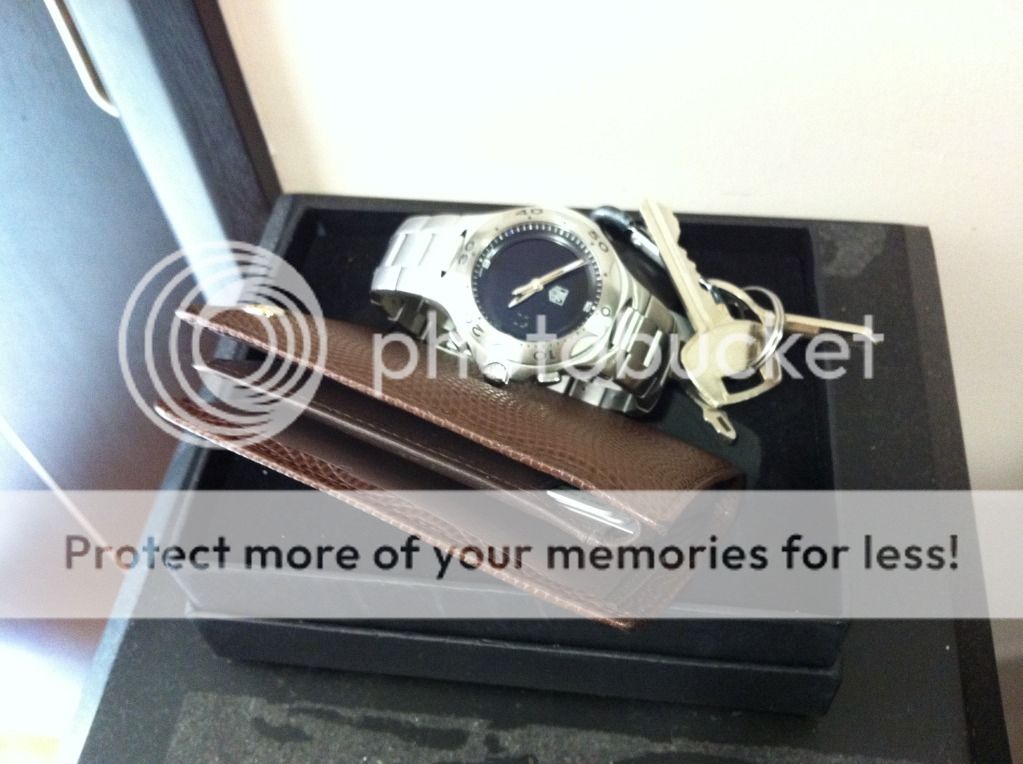
Take a gift box for a wireless mouse, and it can be fashioned to prop up your wallet, keys, and watch:

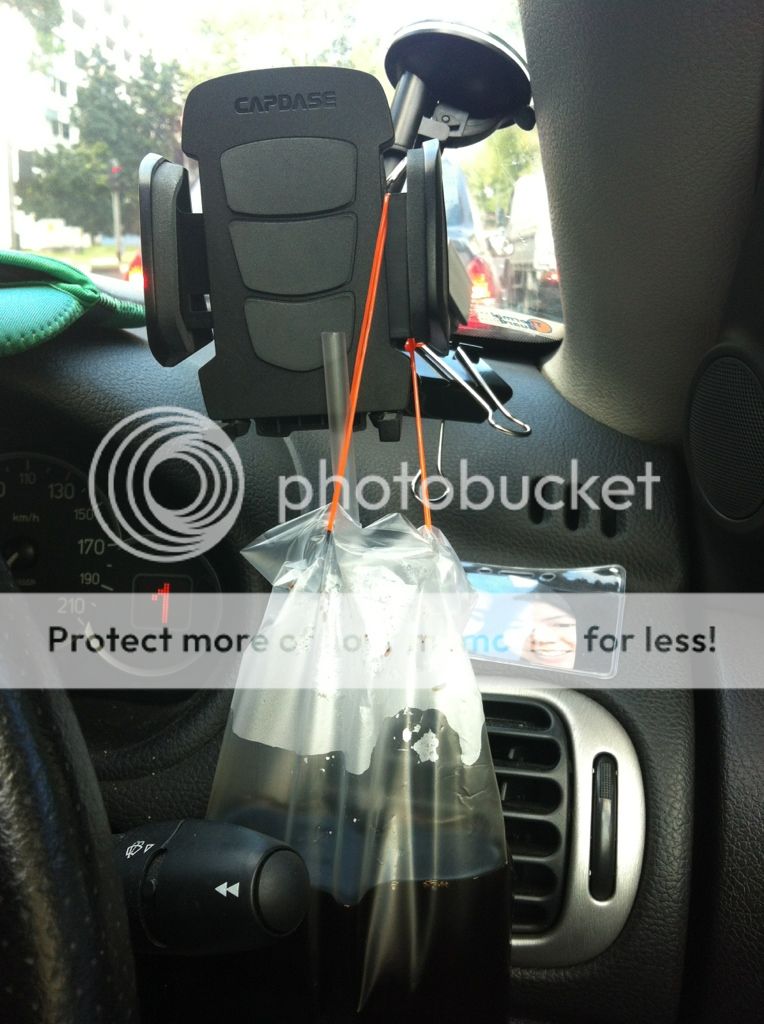
And last but not least, and certainly one of my favorites, here's what I do when I have an open packet of kopi-o and I have no where in the car to put it:


My piece of advice: something of no purpose (or expired purpose) can find purpose again. It's a matter of finding it.

Thursday, January 31, 2013

Gladwell's Rule


I'm sure you've heard of Gladwell's Rule at some point in time or another. It has become the mantra for self-help and a guide post for the hopefuls who want to excel in something, be it a hobby or a professional activity. Simply put, Gladwell's Rule says that if you want to excel in something, you have to put in an average of 10,000 hours to reach the standard of professionals. This was backed up with research conducted on budding musicians in conservatories and athletes-in-training, where the researchers tracked their practice/training routines and tried to establish a direct correlation with their eventual results.

Just for fun, I tried to estimate how much time I put into playing my guitar. My rough conservative estimate of the amount of time spent practicing, noodling and gigging are as follows:

15mins of practice per weekday
3 hours of practice over Sat/Sun (including worship prac)
2 hours of gigging per week (including serving on worship teams)
(15x5)/60+ 3 + 2 = 6.25 hours per week

I have averaged this out with the consideration that I used to put in 8-10 hour practice regimes when I was in Secondary school, and I used to gig every 2nd night at one point in my life. Now, I'm happy with not practicing the entire week, and probably clock in practice only for the purposes of playing in church, teaching guitar, serving on Sunday, and the occasional gig with YFC. Over 14 years, this gives me:

6.25x52x14 = 4550 hours

Alamak. I'm way short of Gladwell's 10,000 hour rule! Quantitatively, it looks like I have to increase my practice time, which I have resigned to admitting that it's downright impossible. Family, work and ministry commitments are just too demanding to accommodate this goal of reaching 10,000 hours.

I will take encouragement, however, that I have nearly reached the halfway mark, with mathematical proof that I'm semi-pro :P

Before some of you despair that you will never reach 10,000 hours, several scholars and psychologists have debated Gladwell's rule. They say it is inconclusive that the rule is universally applicable--mathematics students who take part in competitions and memorize the terms in irrational numbers (like Pi, for example) take only about 500 hours to become proficient at reciting numbers from memory. It is easier to be considered a prodigy at areas where the competition is significantly less (like reciting numbers).

For further reading:
Malcolm Gladwell - Outliers
Why Gladwell's Rule is Wrong

Wednesday, January 16, 2013

How Would You Respond?


I chanced upon this video when browsing a fellow YouTuber's guitar lesson channel. Don't let the Grammar Nazi in you dismiss the video just because of its title--sit down and listen to it. Listen to the anger in the mother's voice. Observe how the guitarist (the subject of the verbal assault) doesn't speak a word against his mother. If you can, put yourself in the guitarist's shoes.

It is unfortunate when one doesn't have the love and support from loved ones. I've been there before, and perhaps even now, I face parental/societal disapproval of what I'm doing with my life, particularly because I devote so much time to music, the guitar, and my ministry. Music is important to me. At one point in my life, I was dreaming of world tours with the band, playing 250 nights a year, playing for sold-out concerts at iconic venues (I have dreams of playing at places like the Royal Albert Hall, Budokan, and our very own Indoor Stadium), and living for the thrill of performing.

Alas, the sad fact of life is that not every boy who dreams of becoming an astronaut becomes one. I have resigned to the fact that I will probably never play in a band that will do world tours, or cut chart-topping CD's, or get to do guitar clinics to inspire young guitarists to play with all their heart and soul. That being said, I have hope: I'd like to think that the musicians I jam with are world class!

I commend the guitarist for not retaliating against his mother. Whether or not he was inwardly spiteful is unbeknownst to us, but I think it was a good move not to speak up. It may appear to be "cowardly", but I'm very sure that silence in this case is the best way to keep things cool and under control. Hear the conviction in the mother's voice. There's no way she will be persuaded by a verbal exchange. She won't understand the value of music in the confines of her son's room. And you know what? I also think that this mother will not understand even if she saw her son performing on stage, where I believe he will be visibly passionate.

I'm in no position to speak about parenting, but I think it's not very helpful to attack your child's dreams and aspirations. I can testify that it really hurts. It shakes a person to the core. It shuts him out even more--he'll want to prove you wrong. He'll want to do it because you said he can't (if he follows his rebelliousness to the end).

How would you respond? How would you speak as a child to your unloving parent, or as a parent to your child with a supposed "useless" dream?

Friday, October 19, 2012

Over-reliance

I have an iPhone 4 and I stuck on an anti-smudge screen protector as soon as I got it. I thought that it was absolutely necessary to have that additional layer of plastic. It gave a heightened sense of security. It gave more confidence to me as I handled (or manhandled) my phone with wet hands still drying from washing up, dirty hands from cleaning my car, and oily hands from checking my phone while eating my meals.

Two days ago, my sister gave me a new cover as a birthday present. It was a really cool cover that hugs the body of the phone very tightly--so tightly that when I put the case on, it managed to squeeze the screen protector right off! Naturally, I panicked. It was unprotected!

However, when I tried to use the phone without the protector, I noticed two things:
  1. The screen by itself is bright, clear and beautiful. There's detail in apps and photos I never knew was there until now. You actually don't need the screen protector, which reduces the brightness and clarity of the screen by quite a fair bit. I'm sure Apple designed the iPhone to operate without a screen protector, and it certainly can.
  2. You can exercise some extra care by ensuring your hands are clean(er) before handling the phone. Even if the screen gets smudged, it's a minor annoyance which can be addressed with a simple cleaning cloth.
Now, I'm a big fan of teachable moments, and I firmly believe that God uses anything and everything to teach us. As I was reflecting on the new-found brightness and clarity (it was there all along, just clouded by the screen protector), it gave perspective on how we Christians read our Bible. We're privileged to be in a modern age where information is accessible, and consequently we have many things to supplement our Bible reading. Examples include devotionals, commentaries, bible study articles, sermon videos on YouTube, and a multitude of iOs apps. The list will certainly get longer as technology progresses.

The supplementaries are great. The hard work of bible study is done for us, so all we have to do is simply read the interpretation. Difficult passages containing idiosyncratic phrases or eccentric behavior become easier to understand once we recognize the nuances of the language and the cultural context in which they are written. However, while I'm glad that we have unhindered access to such supplementary materials, I'm concerned that there may be an over-reliance on them to the point that we feel we cannot read, study, and apply our Bibles without them. If we were to be honest, we would admit that:
  1. The Bible by itself is entirely sufficient. Like the iPhone screen, it is clear, bright and beautiful for those who would read deeply into it. Psalm 119:105 reads that "Your word is a lamp to my feet and a light for my path". I'm sure God designed us to be able to interpret His word without supplementaries, and we certainly can.
  2. We can exercise some extra care in reading the Bible. When Jesus taught that we are to love the Lord "with all our mind", I believe that one aspect of that is to take the study of His word seriously. This means doing the hard work of bible study ourselves, taking on the role of the biblical interpreter. When and where was the text written? What type of literature is the text? What kind of literary devices are used by the characters in the text? What is the central idea of the text? Does reading before and after it give clarity as to what the author of the text is trying to say? Even if we don't understand the text fully, it's a minor annoyance which can be addressed by letting other parts of scripture shed light on the text in question.
Of course, if you're a new Christian, reading and interpreting your Bible for the first time is daunting and can be intimidating; by all means, refer to the supplementaries. My challenge is to the seasoned Christians out there--those who have the capacity, capability and the responsibility to read deeply into God's word.

    Monday, September 17, 2012

    Going Fender


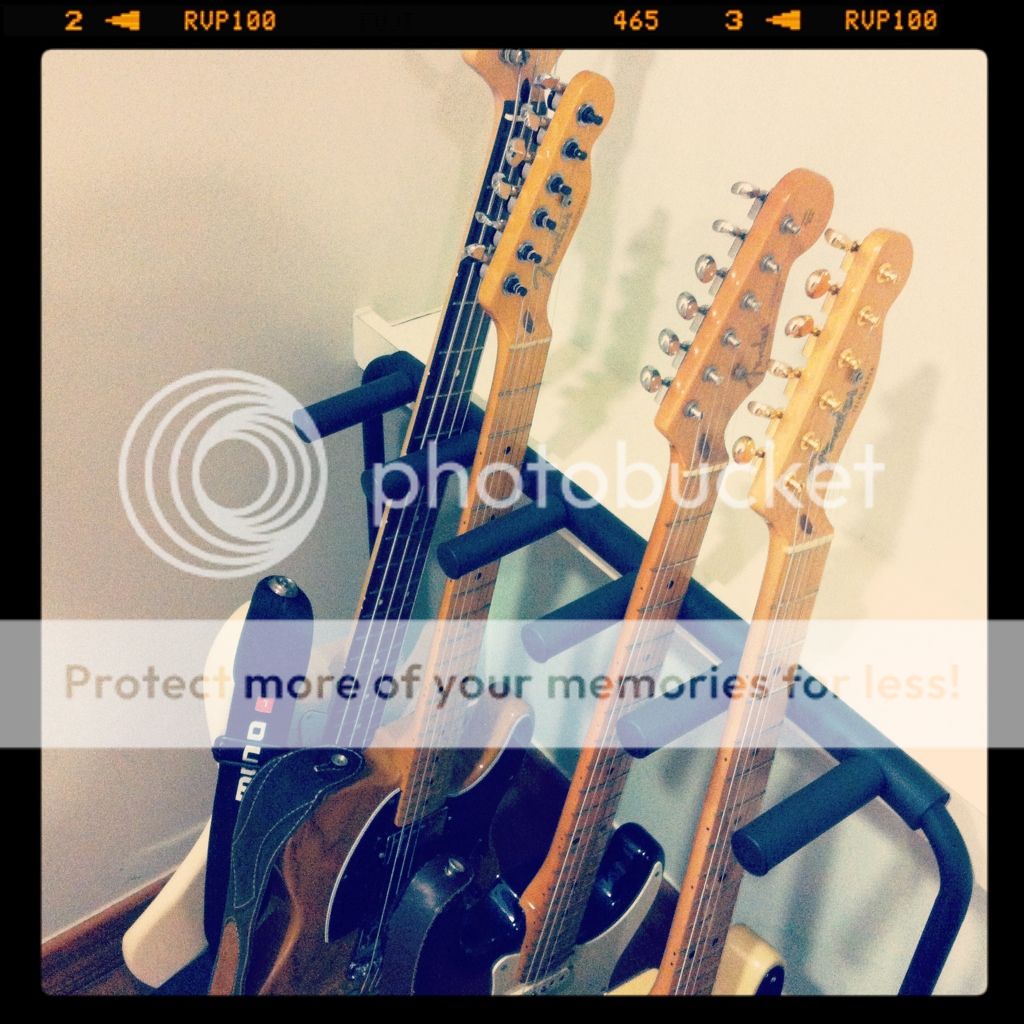
    Fender guitars used to bear the brunt of my guitar manufacturing criticisms. For a design which has essentially gone without much significant revision, I concede that Leo Fender got part of the formula right. I use the term "part" because the design isn't perfect. There are obvious flaws with the solid-body electric design: early '50s models can only make truss rod adjustments by removing the neck first, the V-shaped neck is awkward to grip initially, the tiny frets meant you have to be precise and fret lightly, and true single coil pickups have worse grounding than the cheapest radio you can buy.

    When faced with these problems, guitarists can choose to react in one of two ways. Firstly, they can avoid the problem altogether. It is certainly a more natural solution to find guitars which address and correct the flaws. Parker and Steinberger guitars, for example, have far superior playability, durability, balance, and features. Adrian Belew of King Crimson made the switch from Fender (most notably known for his iconic pink strat) to Parker because they "have none of the inherent problems and make [him] play better". 

    On the other hand, guitarists can accept the flaws and work around them. I have personally gone through this route and can attest: it's a lot of hard work. To play fast and fluidly on a strat requires one to be precise and accurate with a light touch in both hands. Your left hand has to accommodate the neck profile and small frets by bending in a certain way. Your picking hand has to play around the pickup spacing and slanted bridge pickup, being careful not to knock into the volume knob.

    To cut a long story short, I think by accepting and accommodating these flaws, I've ended up becoming a better guitar player. I was a very heavy player with a heavy hand who came from a metal background, so when the time came to retire from that particular scene, I needed guitars that were suited for far more mellow music. Acquiring my strat and tele has lightened up my touch tremendously, and that has made me far more dynamically-sensitive.

    Perhaps most pertinent to a GAS-prone guitarist is that you'll have to acquire more gear to get a single coil to really sing. They aren't as beefy as their humbucker counterparts, and they tend to have this shrill treble bite to them which isn't too appealing in a modern musical context. My personal solution was to stack my overdrive pedals with some EQ to roll off that high end, both on the guitar and on the amp side. I think this has had the side effect of making everyone's single coil tone unique, in that people use different configurations of pedals and amps to achieve an entire spectrum of tone, from full and fat to thin and shrill.


    My simple exhortation to those dismissive of Fender guitars is to try them out. Take a vintage guitar out for a spin. You just might be very pleasantly surprised.

    For further viewing:
    Dave Hunter and Carl Verheyen demonstrate telecasters

    Carl Verheyen demonstrates his stratocaster

    Twitter Delicious Facebook Digg Stumbleupon Favorites More