Dotted Eighth Delay Studies

Setting up the U2/Hillsong delay in a variety of situations.

The Sessionists

Esther Subra (vocals), Serena Chew (keys), Justin (guitars), Alphonsus (drums and percussion)

Thoughts on G.A.S.

Why you should save up for an expensive guitar.

Setting Up Disaster Area DPC-8EZ and DMC-8D MIDI Controllers

An easy-to-follow video tutorial to get those patches programmed!

An Overview of My YouTube Channel

Feel free to browse some of the playlists on my channel. Hopefully this leads to you liking and subscribing!

Thursday, October 27, 2011

Analog in Disguise (Playing with Solid State Amps)

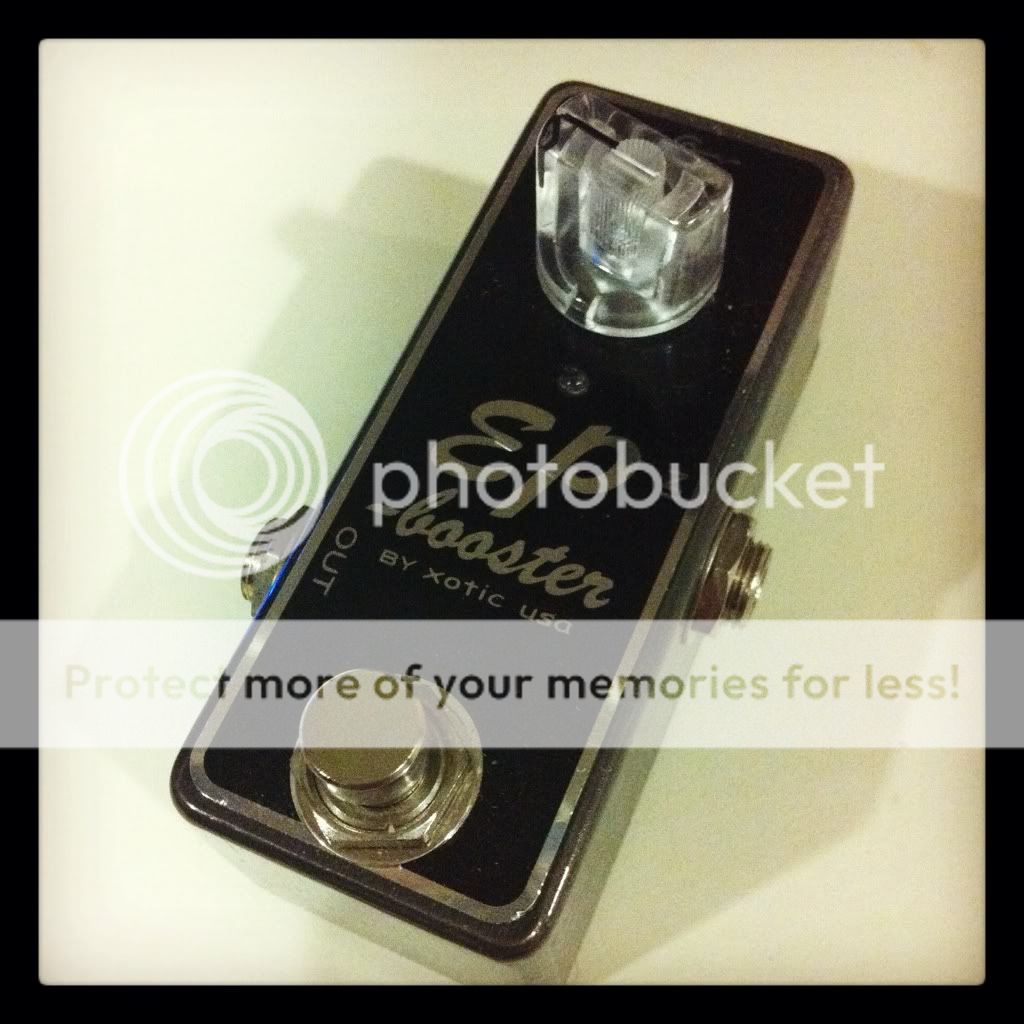
I got my hands on another EP Booster. Before labeling me as an excessive tone nut, let me justify why. Xotic came up with two versions of this pedal: Version 1 has a bright switch and a bass boost, while Version 2 replaces the bright switch with a +3dB boost (which in essence is a unity gain switch, because when disengaged, there's no boost). You can run this pedal on anywhere between 9V to 18V, where 9V gets you more gain and compression, and 18V gets you more clarity and headroom. I personally like the sound of 18V, so both my EP boosters are cranked with that voltage.

Now, I normally don't gig with my own amp because it's a 55lb monster, and my pedalboard is set up such that 90% of the tone comes from the pedals, and I run the amp clean with no drive at all. This theoretically means that I can play through solid-states and tube amps alike with little difference in tone.

Here's the problem: solid-states don't have a nice power amp, and tend to sound flat, lifeless, harsh (insert negative terms here) without the warm, fat response I like with a tube-driven power amp (to clarify, I find that even solid-state rectified tube power amps sound great to my ears). So while my first EP Booster is acting like a preamp, I'm using the second EP Booster as a "power amp".

Enough anthromorphic babble. Let's jump right into the set up. The rule of thumb with pedals:
  • Pedals sound different when placed in various places. For the EP Booster, placing it before overdrive pedals tends to squeeze more gain and compression out of the overdrive.
  • Pedals at the last of the chain tend to influence the tone most. When the EP Booster is the last in the chain of overdrive pedals, it provides more clarity and dynamic sensitivity, allowing you to roll back the guitar volume to clean up. With my fingerpicking technique, I can also get a rounder tone using my fingers instead of a pick.
You'd notice that the EP Booster only has one knob, and I'm making it sound like there are many switches to toggle. Well, there are switches; you just can't see them. They're dip switches inside the pedal, so you have to use a screwdriver to dig into the pedal. Let's take a look at the manual for where the dip switches are located:
I managed to flick the switches down with the long bit of my fingernail. Either that, or a simple flathead screwdriver will do the job. Don't worry, these are really tough switches which don't break easily. Let's see how I set this up on my pedalboard:

The Setup
  1. EP Booster Version 1 - Run at 18V and at "Vintage" settings (both dip switches down)
  2. Overdrive pedals
  3. EP Booster Version 2 - Run at 18V at "Unity Gain" settings (don't engage the +3dB switch)
  4. Volume pedal
Older setup, mid 2011

The volume pedal is essential to getting the tone right with solid state amps. I think it's got something to do with the fact that when you're hitting the front of a solid state with several pedals, a full signal will cause the front-end of the amp to clip. In a tube amp, this sounds great, but with a solid state, it's fizzy, harsh, lifeless (insert more negative terms here). I park the volume pedal at roughly 80% the way up.

Now, after all this time (and money) setting it up, how does this setup fare in real life?

I took this pedalboard to a gig where I used a Line 6 Spider III 30W. Someone came up after the show and asked what amp I was using, expecting it to belong to the "expensive" category of amps. I believe the word "flabbergasted" adequately described the reaction. :P

I haven't tried this out on a Roland Jazz Chorus though, so don't take my word that it works for all solid state amps!

For further reading:
Xotic's Product Page (for the white EP Booster)

Sunday, October 23, 2011

Possible Band Names?

YFC's Performing Arts ministry band needs a name. I know my brainstorming sessions for band names don't really have a lot of scriptural backing to them (like attaching a verse directly to them), but I do keep them biblically sound. Here are my suggestions:

Return
This name came about after checking work emails for the umpteenth time, and thinking about a name which revolved around the idea of turning.

When you read your emails, the subject header is the most important part of the message. If you don't get any of what was said in the main body of the email, at least remember the subject header. Likewise, Christians have the most important message to share: the Gospel. If nobody understood the music that was played, or if no one remembered any song that the band dished out, may the listeners remember that the Gospel was shared.

The concept of turning needs no detailed explanation. Responding to the Gospel of Jesus Christ involved a 180-degree turn (maybe the arrow should be halved instead of a full turn?) from my godless ways.

Afterthought:
This sounds like a Korean boy group. In fact, running a search on Google yielded a hit on an existing band with this name--some Norwegian power ballad rock band. I can't pronounce the band members' names.

This Way Up
I thought about this while contemplating ordering a guitar from the US, and hearing the horror stories of how guitars come chipped and knocked about because the distributor didn't package the guitar properly.

A box containing fragile items needs to be oriented in the right way, otherwise, as it moves through two points, you'll end up damaging its contents. We all try to move through life living our own way apart from God, but the truth is, Jesus really is the truth, the way, and the life. No one gets to the Father except through Jesus.

Afterthought:
There's a four-piece party cover band of the same name on Facebook. Sigh.

Some rejected ideas:
  • Driftwood - Named after contemplating that a piece of dead, fallen wood in a river can only be picked up by a lumber, who will use it for nobler purposes like furniture or river dam construction. I thought it was cool, but it sounds like it belongs to a metal band.
  • One Step Closer - Whether Christian or not, we're all taking one step closer to our eventual eternal destiny. Rejected due to a Linkin Park song of the same name.
What do you think makes a good Christian band name? Let's hear it!

Do You Hear It?

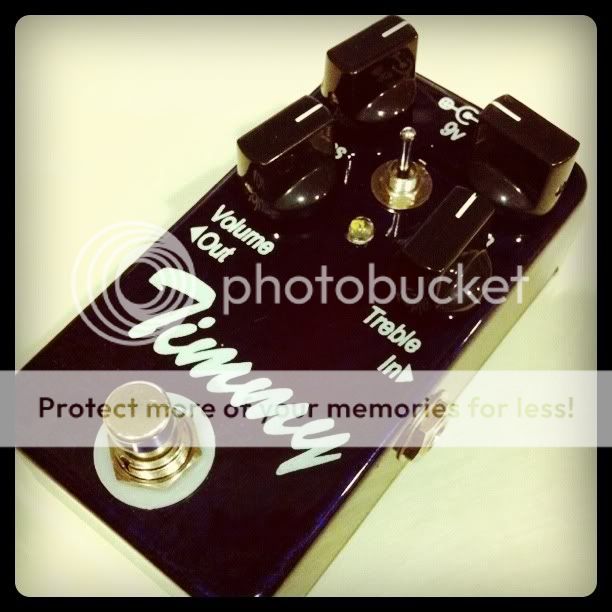
The hallowed Paul Cochrane Timmy pedal. I've GAS-ed for one for many years, having read the reviews, watched the videos, and heard the audio clips. And when the right person came by with the right price, I pounced on it. I still remember peeling back the box and beholding the pedal in my hands for a while, before plugging it in and powering it up for the first time. It was audio bliss. Every chord, every single note line, every pinch harmonic, every slap harmonic--every technique I threw at the Timmy just made my playing sound so much better.


Intense, huh? All that extra expense in an attempt to achieve "boutique" tone.

The Wet Blanket in me was very quick to pull me back to earth. Let's face it, no one's really going to be able to tell the difference between a Paul Cochrane Timmy and a Boss SD-1. No one's going to come up to me and comment how the Timmy made all the difference in making my guitar tone sound good (and the opposite is true; no one's going to come up and complain that the reason my tone sucked was the SD-1). 

After-thought:
No offense to SD-1 users, of course. I've played with that pedal before, and it just didn't work with my rig, and hence, the example. I know fantastic players who have great tone using that pedal.

You're likely going to hear generic comments after a session: "Your playing was nice" and "I liked that tone" for the supporters, with perhaps an equal number of "your playing sucked" and "I hated that tone" from the haters.

As a musician friend of mine commented (or perhaps lamented) before, the only person who can really tell the difference is yourself, or a fellow guitarist who has a good ear for tone. Our pursuit of tone is a pursuit of personal satisfaction, which I think isn't necessarily a bad thing. If a guitarist feels hampered, or is in constant lament over how bad his tone is, he's not going to be focused on being creative with music. He's going to be distracted by how his gear doesn't measure up to his personal expectations.

My suggestion for those who are beating themselves up all the time: save up, spend it, get it, use it. Acquire gear to the degree you have been called as a musician, be it a hobbyist or a full-time professional. Once you put a cap on how much you'll spend (and get), you'll start focusing on making your music sound good.

Tuesday, October 18, 2011

Strings and Things


I recently stringed up my Fender Stratocaster with 11's in an attempt to test out the myth surrounding different string gauges and its effect on tone. The myths do somewhat correspond logically; higher gauges mean more string mass, and more string mass means larger vibrations, which in turn, ultimately leads to beefier, heavier tone.

I tried it out and got myself really frustrated pretty quickly. Not that the tone was disappointing--in fact, I felt a rather pleasing change in tone. Somehow, the thicker strings EQ my tone from mid-rangy to something a little more round. Rounder is better in my tone book, but that's where the advantages of thicker strings ended. My strat isn't the easiest of guitars to set up, and with heavier strings, the tension applied to the bridge is a lot higher. It pulled my bridge clean off the body, which made it interesting considering I've never played a strat with a "floating bridge". Fun to pull up and down, but throws the whole guitar out of pitch, and intonates terribly.

The next disadvantage really threw in the towel for me. Part of the vibe of heavy gauge strings is that you can really dig in without worrying about the guitar flubbing out. Now, I don't have a strong right wrist anymore, and ever since my wrist injury I've had to modify my technique to accommodate it. I've developed a rather light touch, with very mild pick strokes, and using my other fingers to help pick.

How does playing style affect your tone with heavy strings? For one thing, my volume dropped drastically, and I sounded like a kid in the garage picking up the guitar for the first time. My pick attacks disappeared, and made the finger movement noises from my left hand a lot more prominent.

I did try to salvage the situation: down-tuning the guitar from standard in E to Eb so as to decrease the string tension (it returned the bridge to its neutral position which helped keep the strat in tune), increasing the gain on my overdrive pedals to compensate for the lighter pick attack, and setting my playing height to maximum so as to help my left hand play as precisely as possible.

It worked. Well, sort of.

It just didn't feel right. I couldn't solo with the confidence I had with lighter gauge strings. As you can tell, playability is a big factor for me when it comes to the guitar, and guitars that don't play well or feel well just don't sound good (to my ears, anyway). So a month went by with this ridiculously awkward setup on my strat, and before I knew it, I found myself finding an excuse to swing by Davis and get my DR 9's, a staple of mine for the past 6 years or so.

A few guitarists whom I listen to use heavier gauge strings: Phil Collen of Def Leppard (he mentioned in a rig-rundown on Premier Guitar that it's "easy" to bend 13's!), Kenny Wayne Sheppard, Stevie Ray Vaughn and Jeff Beck. It's for them, and not for me.

Further reading:

Sunday, October 9, 2011

"A Transformed Life" (Laity Sunday)

Laity Sunday Sermon: "A Transformed Life", Matthew 5:14-16

Light takes away darkness. It exposes hidden deeds. It brings truth to those in sin, and brings hope to those burdened (John 3:19-21)

As Christians, we must a life that shows the light of Jesus to an unbelieving world. There is no reason to hide our identity as Christians. If we as Christians wish to place our light under a basket, and are unwilling to allow our light to shine, we have failed in our duty to be God's light.

Paul writes in Ephesians 5:8-13 that once we have the light, we must be transformed, leading a life that God approves.

The fruits of light versus fruitless deeds of darkness: what is your life marked by?
-Self-centredness
-Sexual immorality
-Gossip
-A spiteful, loose tongue

We don't need better evangelistic methods; we need believers who live like believers. Can your friends/relatives/colleagues notice the difference?


Friday, October 7, 2011

(Struggling to) Tithe

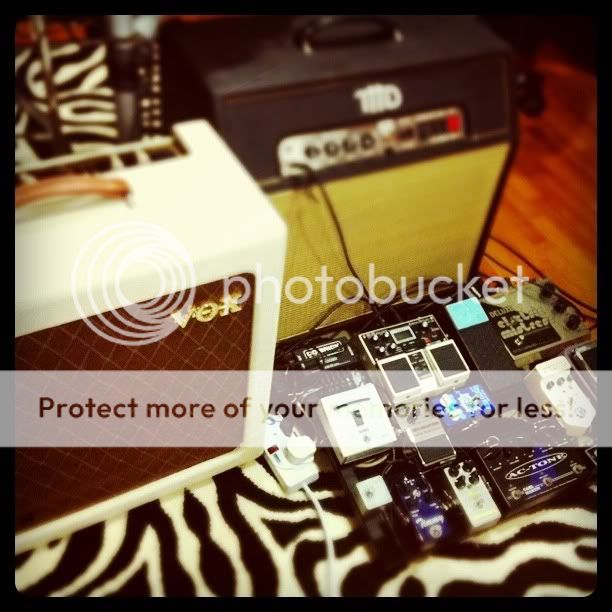
It's difficult to pin-point when it started, and even harder to decide where and when it must end. Gear Acquisition Syndrome. It's a disease rife amongst musicians, and particularly electric guitarists. I seem to have a need for 3 amps, 14 pedals, 2 multi-effects units, and 8 guitars. I seem to be able to justify the need for more gear; a Palmer DI speaker simulator for the gigs and sessions I don't use an amp, an A/B box to split between my AC15 and my THD UniValve, and another Xotic EP Booster to tame the overdrives (a great tech tip used by the great Allen Hinds).


Do I really need all this gear? If I were to be outright honest, I'll have to admit that I don't. The conviction came when I had to come clean before the Lord about my tithing practices since I began work. Why is it so difficult to tithe, but so easy to spend? Why is there a struggle to hold on to the material, if everything I have is a gift from God?

Clearly, the priorities of the heart are misplaced somehow.

I must remind myself that God is more interested in the heart than He is in the amount. He's interested in my attitude towards tithing than how much I put in the offering bag. Tithing is an outward and visible sign of my acknowledgment that it really belonged to Him all along. It teaches me that God wants to enjoy first priority in my life.

Monday, October 3, 2011

The Evolution

13 years ago, I was in a class that wasn't working out well for me. I was practicing the same song for 4 months, and I threw the towel in, seeking to learn the guitar myself. This did not bode well in the ensuing months. None of the tab stuff made sense to me, my fingers were too chunky to be making those "insanely fast chord changes", and my calluses hadn't formed. I still remember telling myself that the guitar just wasn't my instrument.

Napster, fellow classmates and church mates introduced me to a whole new world of sonic pandemonium: Blink 182, Greenday and X Japan. Suddenly, the guitar was just so alive with distortion. A renewed resolve got me buying a cheap Yamaha strat copy and a 10W practice amp. Power chords made sense. Tabs made sense. As my basics improved, so did my ear (I wasn't big on transcribing, so I learnt everything by ear), and before I knew it, I was working out every MP3 to prepare for mindless noise-making at the jam studios, and every radio song to impress the opposite gender. I was so dichotomous. My fellow punk/metalheads knew me as the noise maker, the "down-stroke king", and the anti-pop. My female friends knew me as the serenader, the guy who was "in touch" with the emotional songs.

A few years later, with Dream Theater and Joe Satriani changing my musical world once more, I was convinced I could be one of the fastest shredders. I practiced every single day, sometimes clocking 6 hours at a go, and sometimes during the holidays, I managed 10-hour routines.

I happened to listen to my old recordings with my previous bands and projects. I became a shredder, launching a sonic barrage of 16th notes at 200bpm. I loved distortion, cranking the amp to eleven and keeping the guitar's volume and tone at max. I copied riffs, licks and solos from John Petrucci, Paul Gilbert, Joe Satriani, and pasted them into any and every musical situation, even if it didn't fit into the context. It didn't matter what amp or guitar or pedal I used; they were tools to connect my fingers to the guitar, and to connect my music to the crowd.
Those were fun days, but I was blissfully unaware of how to serve the needs of the song and the crowd. Everything was about how I wanted to sound like, enforcing my tone onto listeners in the name of my personal creative expression. It took me a long time to realize that the band doesn't revolve around me. I had to get my head around the fact that the listener was trying to make sense of the band as a whole, not just the guitarist.

Serving at Youth For Christ was a fairly recent milestone in my life, but it undid all the bad habits intrinsic to my self-indulgent electric guitarist ways. I began to enjoy interacting with the rest of the band, listening out to what each band member had to say, and reacting to it in turn. Victor Wooten said that performing music is a lot like having a conversation; everyone can't be talking at once, otherwise the message gets garbled, so everyone's got to take turns.

Scaling down, pulling back, letting others take the spotlight--these were concepts I came to integrate into my musical identity, which evolved from the "fastest-slinger" to the sideman, and from the show-off to the supporter.

Sunday, September 25, 2011

Why Did You Laugh?

Genesis 18:1-15

Theological comedy: When God surprises man with His methods, where we think they are ridiculous or silly.

God's ways are not for the amusement of the idle nor is it for the fascination of the curious. He works wonders an in unexpected ways
1. For people who wonder how they will survive
2. To challenge our common assumptions we have about Him

Example:
Noah and the ark, where the world then did not know rain, much less a flood

In our text, Sarah laughed because she never thought it was possible for her to have a son at such an old age.
-Note: Her laughter was probably dark, laced with sarcasm and cynicism.

4 assumptions we make about God:

1. We assume God will work within a certain time frame, like setting an alarm clock in our hearts
-When the alarm rings and the prayer request is not met, we may grow to become bitter

God appeared to Abraham and made the promise of the provision of a son when he was 75 years old. God's second appearing to remind him of the promise happened when Abraham was 99 years old, and when Sarah was 90 years old.

Sarah's laughter came from pain and disappointment that God had not yet fulfilled His promise. However, God demonstrated that despite His apparent delay, He accomplishes the seemingly impossible.

2. We assume that God's work is limited to our own abilities
-The bible often shows us that God uses the weak, the least talented, and those with physical limitations to accomplish His great work.
-Notable examples: Moses the stutterer, David the shepherd boy, Joseph the youngest (and later with a prison record).

3. We assume God must work according to our ways and understanding.
-Isaiah 55:8-9
-We are guilty of thinking, "My way is Yahweh." We must understand that God does not think like us. We must trust in God and surrender completely to Him.

4. We assume that God's work is limited to those who never fail Him.
-Genesis 21:1 "Now the Lord was gracious to Sarah as he had said, and the Lord did for Sarah what he had promised"
-God's work is always personal and it goes far beyond us. It is gracious and He includes even those who failed or disappointed Him.

All Things New

I pray that in Your good time,
You may reveal Your glory to these precious ones.

Friday, September 23, 2011

Massive Unboxing!

A clearance sale is bound to strike a good chord in a guitarist. I've always dreamt of owning a THD amplifier for years, having seen small blurbs of it in guitar reviews, and hearing raves amongst my guitarist friends. Reading about the features was enough to convince me that this amp was worth the boutique price tag that it carries.

I finally found a place that sold THD products, and specifically, the combo version of the UniValve! Kudos to Chao for the great tip-off! I made my way from an external course at work, traveling from Science Park to Peninsula Plaza at peak hour, with ERP and parking, just for it. Yes, it's worth that amount of trouble.

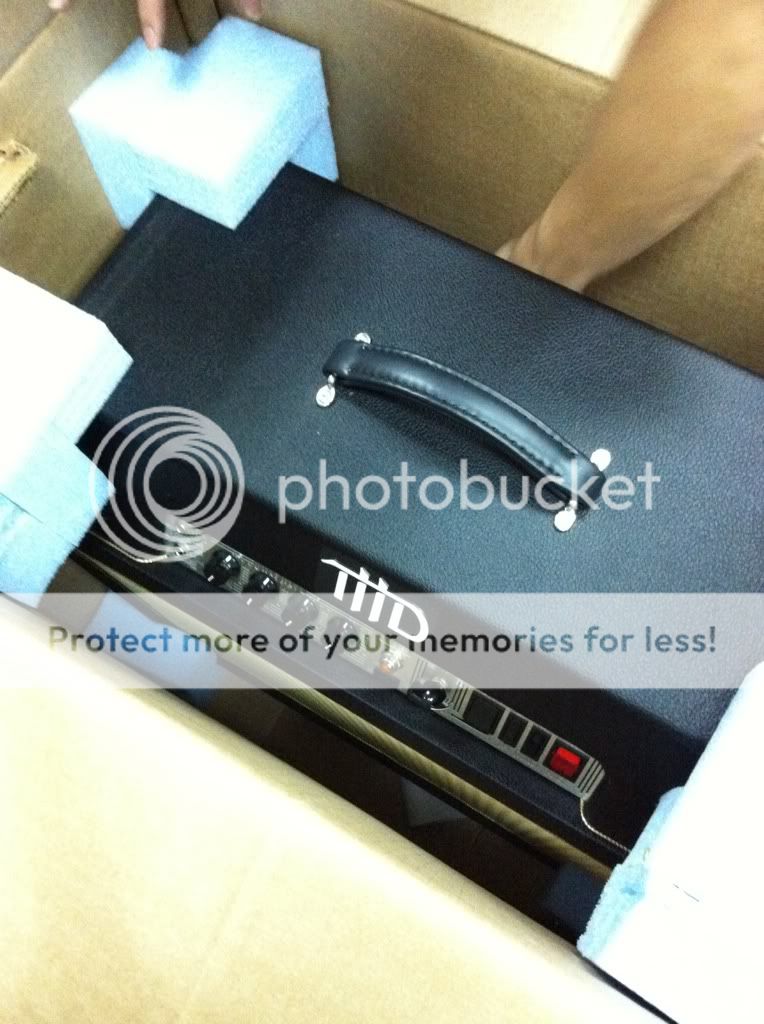
The picture doesn't really show its size. It's a whopping 53lbs and I had to leave the box at the shop!

Unboxing...

The styrofoam in the box provides more of a psychological assurance than actual protection. This baby is built like a tank.

Installing the wheels. Who would have thought it would finally be available on an amp?

And finally, when I lugged it back home and set it up...
This amp delivers serious tone. Everything I threw at it, even my cheapest pedal and guitar, sounded gold. Here's a run-down on what I love about this amp:

The tubes and the Hot Plate
The UniValve is single-ended Class A amp (don't worry, I've provided links to other sites for those of us who don't know the geek lingo), which is my personal preference when it comes to amplification. I think I won't burn the tubes out as quickly as my other friends do, considering my drive section is completely dependent on my pedals and I run the amp pristine clean.


It has two 12AX7's in the preamp and one EL34 in the power amp. Like most tube amps, there are two channels for low or high gain input--which, I recently discovered, simply meant how many tubes were used in the preamp. In the UniValve's case, it's a choice between one or two tubes, and there's a serious jump in the amount of crankable gain between the two channels. The first preamp tube governs the gain and tone of the preamp, while the second preamp tube directly drives the power tube. By varying the gain of these two tubes, you can influence the mix of preamp distortion and power amp distortion, or run a decently clean tone at higher volume by reducing the gain of both.

The power amp tube makes a profound difference on your overall tone, and the EL34 is a favorite of mine.  It has a middy character to it, and has a ton of headroom and volume. A friend of mine joked that if you want to hear an EL34 break up, stand really far away.

My favorite setting so far is the volume at half and the Hot Plate at half. If you run your rig like mine, where your pedals are your main source of overdrive, playing your amp at a volume lower than its breaking point will sound over-compressed. However, if you run an attenuator, the more you attenuate the signal, the amp becomes less open and you lose some dynamic depth. It's a delicate balance that I've easily achieved with the UniValve.

The controls
With clean amps, I'm a follower of the fabled Fender Deluxe Reverb mojo settings: 6-6-3 (Bass, Middle, Treble respectively), which provide a woody body and a "blanket" warmth to the guitar tone. Instead of a middle control, the UniValve features an "Attitude" control, which I'll let the company describe: "The Attitude control determines how the driver stage responds to signal and how it drives the power tube." 

The general idea is that when turned fully counter-clockwise, it's more a Fender-like response, and fully clockwise is more like Marshall. THD says it's not a presence control, but the effect is in the same ballpark, in my opinion. Personally, I like it one-quarter up, to get that Fender character with a bit of Marshall bite.


At the rear, there are speaker output jacks for anything ranging from 2-ohms up to 16-ohms. There is also a fantastic isolated line out jack and control knob. You can actually use the UniValve as a preamp for other amps, or you can run it like stompbox in your signal chain. It also works great for direct recording., although you have to get a cabinet simulator, either from something like the Rock Bug by Carl Martin or the Palmer direct box. Alternatively, for the cheapskates like me, I record direct to my computer and use a free plugin. There is also a switch to toggle between instrument-level and line-level output. Its probably the best line-out feature set you'll see on a tube amp.


A few quirky noteworthy things about this amp to up the collector's value: it's signed by Andy Marshall himself, and every amp has a quote from philosophers, presidents, famous musicians, etc. My amp has George Harrison's quote, "All things must pass".  

The cabinet
It's a specially tuned-port bass-reflex cabinet that in their words, "significantly reduce standing-waves inside the cabinet, giving it a very deep, even, tight and punchy sound." To my ears, this sounds amazingly like a 2x12" cab. However, what really kicked up the cool factor for me is that the cabs are modular, meaning you can swap out the UniValve head from the cab for any of the THD amp heads. If I was crazy enough to get a BiValve or a Flexi head, it's possible to remove the metal grill, stick it into the cab, plug in the speaker cable, and it will fit!

In conclusion
I'm able to pull off tones ranging from Earth Wind and Fire to Dream Theater through this amp. I couldn't ask for more.

Further reading:

Twitter Delicious Facebook Digg Stumbleupon Favorites More